Every December, families around Tenafly assemble, in one room, a collection of fire risks they would never tolerate in July: a drying evergreen wired with electricity, candles on the mantel, a space heater taking the chill off the bay window, and a nest of extension cords behind the couch running it all. Fire damage restoration crews know this room well, because when it goes wrong it goes wrong fast, and because nearly every December loss we work traces back to one of four decisions that took less than a minute to make. This post is about those four decisions, the physics behind them, and what the restoration looks like when the odds come due anyway.
The Tree Is a Fuel Question, Not a Decoration Question
A fresh, watered Christmas tree is surprisingly hard to ignite. A dry one is close to a torch waiting for a reason: in fire-test footage, a desiccated fir goes from first flame to a fully involved room in well under a minute, faster than most families can gather downstairs. The difference between those two trees is nothing but water. The rules that keep the tree on the right side of the line: a fresh cut at the base before it goes in the stand, water checked daily (a tree drinks quarts, not sips, in its first week), placement at least three feet from the fireplace, radiators, and any heater, and a firm retirement date, because a tree that stopped drinking is done being a decoration whatever the calendar says. If the needles shower when a branch is tapped, the tree has announced its own departure.
Fire Damage Restoration Around Tenafly: Minutes Away in the Season That Counts
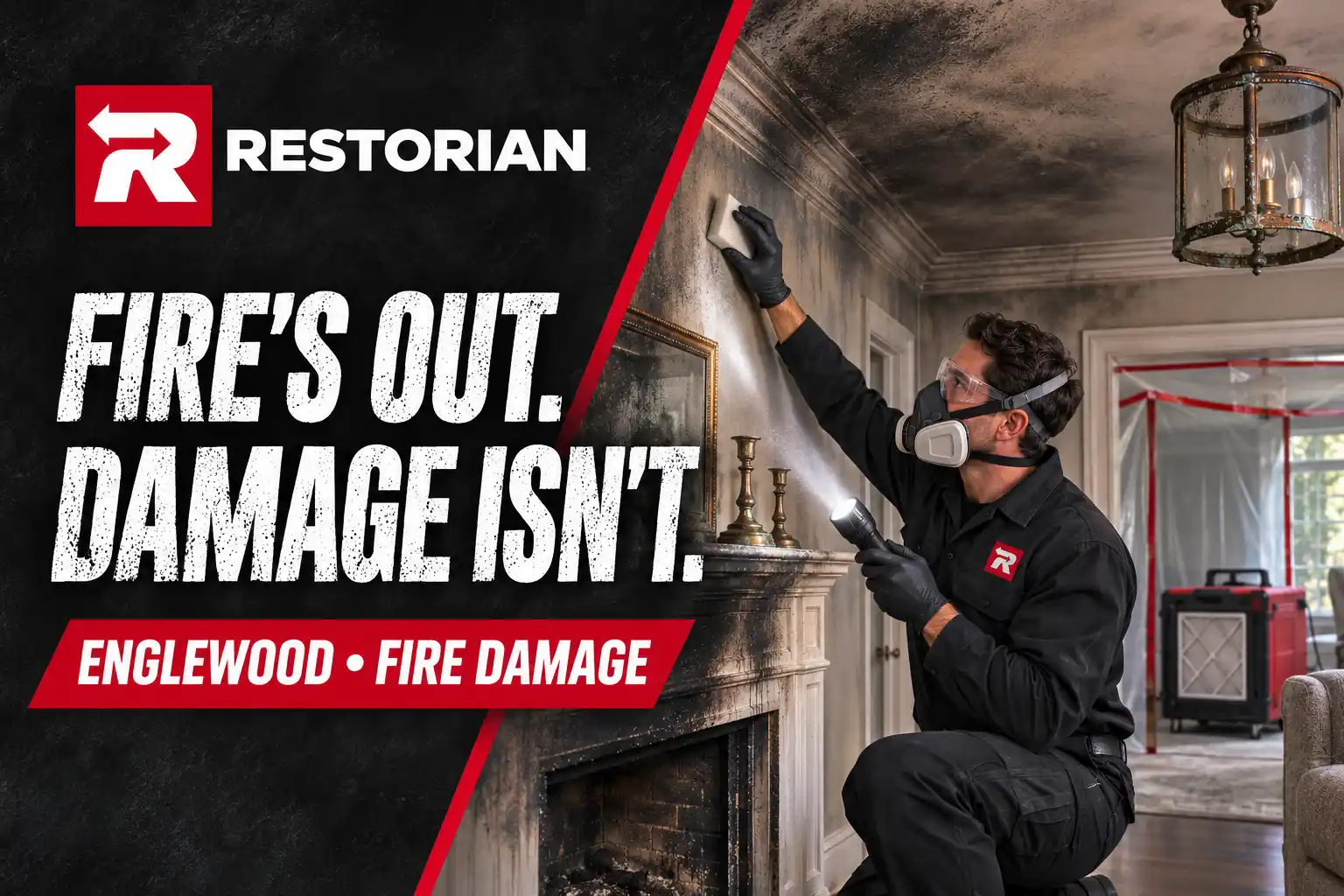
Our crews are based in Englewood Cliffs, minutes from every Tenafly neighborhood, and December is the month that proximity earns its keep twice. First, because heating-season and holiday fires cluster in the coldest weeks, when the house is fullest and the fireplace busiest, and the borough’s older housing stock keeps its fireplaces in actual service rather than as decoration. Second, because the losses that do happen run on the twin clocks every fire sets: acidic soot working on finishes and electronics from the first hour, and suppression water soaking plaster and framing toward the 24 to 48 hour mold window. A December fire is also, almost always, a water loss wearing tinsel, and the response has to run both playbooks at once, which is how we build every fire call: assessment and board-up, drying on its own schedule, soot chemistry matched surface by surface, and the documentation an insurance claim is built from. How we cover the borough, response times included, is on our Tenafly service page, and the wider map is on the Bergen County page. When the worst week of the year picks your address: Restorian, (888) 788-5038, any hour, holidays included.
The Other Three Decisions
The lights and the cords. Modern LED strings draw little and run cool; the hazard moved to the wiring habits around them. The nest of extension cords daisy-chained behind the couch, the cord pinched under the tree stand or run beneath the rug, the outdoor strings fed from an indoor outlet through a window that closes on the cord: each is a slow heat problem waiting for the one evening everything runs at once. The rules: one extension cord per outlet run, nothing daisy-chained, cords visible and unpinched, outdoor strings on outdoor-rated cords and circuits, and everything off when the house sleeps. Timers cost little and forget nothing, and the newer smart plugs add the pleasant bonus of turning the whole display off from bed when somebody remembers at midnight.
The candles. December is the peak month for candle fires nationally, and the pattern is consistent: a candle left burning in an emptied room, too close to greenery, cards, or curtains. The three-foot rule applies to candles too, and the sturdier the holder the better. The honest alternative: battery candles have gotten good enough that guests have to touch them to tell, and they have never once burned down a living room.
The space heater. The device itself has improved enormously; the placement habits have not. Three feet of clearance on all sides, on the floor and never on furniture, plugged directly into the wall (never an extension cord or power strip, which the heater’s draw can overheat), and off when the room empties. The heater that “was only on for a minute” appears in our case files every winter, and so does its cousin, the heater bought for the drafty guest room the week the in-laws arrive, run overnight behind a closed door. If a room needs continuous heat, that is a conversation with an HVAC contractor, not a December workaround.
If the Odds Come Due in Tenafly: The First Hours
Everyone out and the department called; nothing in the house outranks that, and December’s full house makes the head count matter doubly: guests sleeping in unfamiliar rooms do not know the exits the family takes for granted, which is worth one sentence of orientation when the air mattresses get assigned. Once the scene is cleared, the restoration clock starts. Do not re-enter until the department says so, and when you do, resist the two instincts that make December losses worse: do not start wiping soot (wiping sets it; every surface needs cleaning chemistry matched to what burned, and a burned tree’s residue is its own category), and do not run the HVAC, which will redistribute smoke into every room the fire never reached. Photograph everything exactly as it stands, tree included, before anything is moved. Then call the insurer and get the structure secured, because an opened house in December weather compounds the loss by the day.
What we bring to the December version specifically: drying equipment that has to work in freezing weather, contents handling for the season’s particular casualties (gifts, decorations, the boxes of irreplaceable ornaments that smoke finds first), and a documentation discipline that separates fire, smoke, and water damage cleanly, because they are distinct covered perils and the claim settles faster when the file keeps them apart. One December-specific note on loss of use: when a house is uninhabitable over the holidays, the policy’s additional living expense coverage reaches further than most families realize, hotel and meals included, and the receipts from the very first night count. Keep them all, starting before the trucks leave.
The Chimney and the Fireplace, Since December Works Them Hardest
The fourth risk deserves its own paragraph because it predates every other item in the room. December is when fireplaces that sat cold since March go back into nightly service, and the season’s first fires are the audit of last year’s creosote. The discipline is the same every year: a sweep and inspection before the season’s first burn, seasoned hardwood only (wrapping paper and evergreen trimmings burn hot, fast, and high, exactly what a flue does not want), the screen closed whenever the fire is live, and ashes retired to a metal can outdoors with days to cool. The quiet failure mode is worth knowing too: a flue fire does not always roar. Sometimes it just overheats the chimney structure against old framing, and the house learns about it weeks later. If a fire ever sounds like a freight train in the wall, everyone leaves and the department comes, full stop.
And a word on the room’s layout while the fireplace runs: the tree, the stockings, and the gift wrap migrate toward the hearth every year, as if drawn there. Three feet is the moat. Everything combustible lives outside it.
The Short Version for the Refrigerator Door
Water the tree daily and retire it when it stops drinking. One cord per run, nothing chained, everything off at bedtime. Candles never leave a room burning. Heaters get three feet, a wall outlet, and an off switch that gets used. The fireplace gets swept before its first burn and a three-foot moat always. Five decisions, a minute each, and the December living room goes back to being the best room in the house.
Frequently Asked Questions
How fast can Restorian respond in Tenafly during the holidays?
Around the clock, holidays included, with crews minutes away in Englewood Cliffs. December losses get the same same-day response as any other month, and the twin clocks (soot corrosion and the suppression water’s mold window) make those first hours worth more, not less, during a holiday week.
Is a real tree actually dangerous, or is that overblown?
A watered tree is a modest risk; a dry one is a serious one. The fire-test comparison is stark: a fresh fir resists ignition, a dry one can take a room in under a minute. Water daily, keep it away from heat sources, and retire it promptly, and the real tree earns its place. Artificial trees sidestep the fuel question but keep the electrical one, so the cord rules apply to them unchanged.
When should the tree come down?
When it stops drinking, whatever the date says. A tree that no longer takes up water is drying on a schedule of its own, and the week between Christmas and New Year’s is when most trees quietly cross the line. Tap a branch: if needles shower, it is finished. Curbside beats sentimental every time, and the borough’s January pickup exists for a reason.
The fire was small and we put it out ourselves. Do we still need fire damage restoration?
Often, yes. A small fire’s smoke travels the whole house through doorways and ductwork, and its residue keeps working on finishes and electronics for days. A quick assessment with the right instruments tells you honestly whether you have a cleanup, a cleaning, or nothing at all, and the photographs from that visit protect the claim either way.
Does homeowners insurance cover a Christmas tree fire in Tenafly?
Fire is the core covered peril of a homeowners policy, and that holds for tree, candle, and heater fires, along with the smoke, the suppression water, and loss of use if the house is uninhabitable. The friction point is rarely coverage; it is documentation, which is why the first-day photographs and the unit-by-unit record matter so much.
The December living room earns its place as the best room in the house; it just asks for four minutes of respect in exchange. If the season goes wrong anyway, fire damage restoration in Tenafly, NJ is minutes away, every hour of the holidays: Restorian, (888) 788-5038.
Related reading: Water Damage Restoration in Tenafly, NJ: The Leak That Ran All Day · Fire Damage Restoration in Englewood, NJ: The Damage Keeps Moving After the Fire Stops