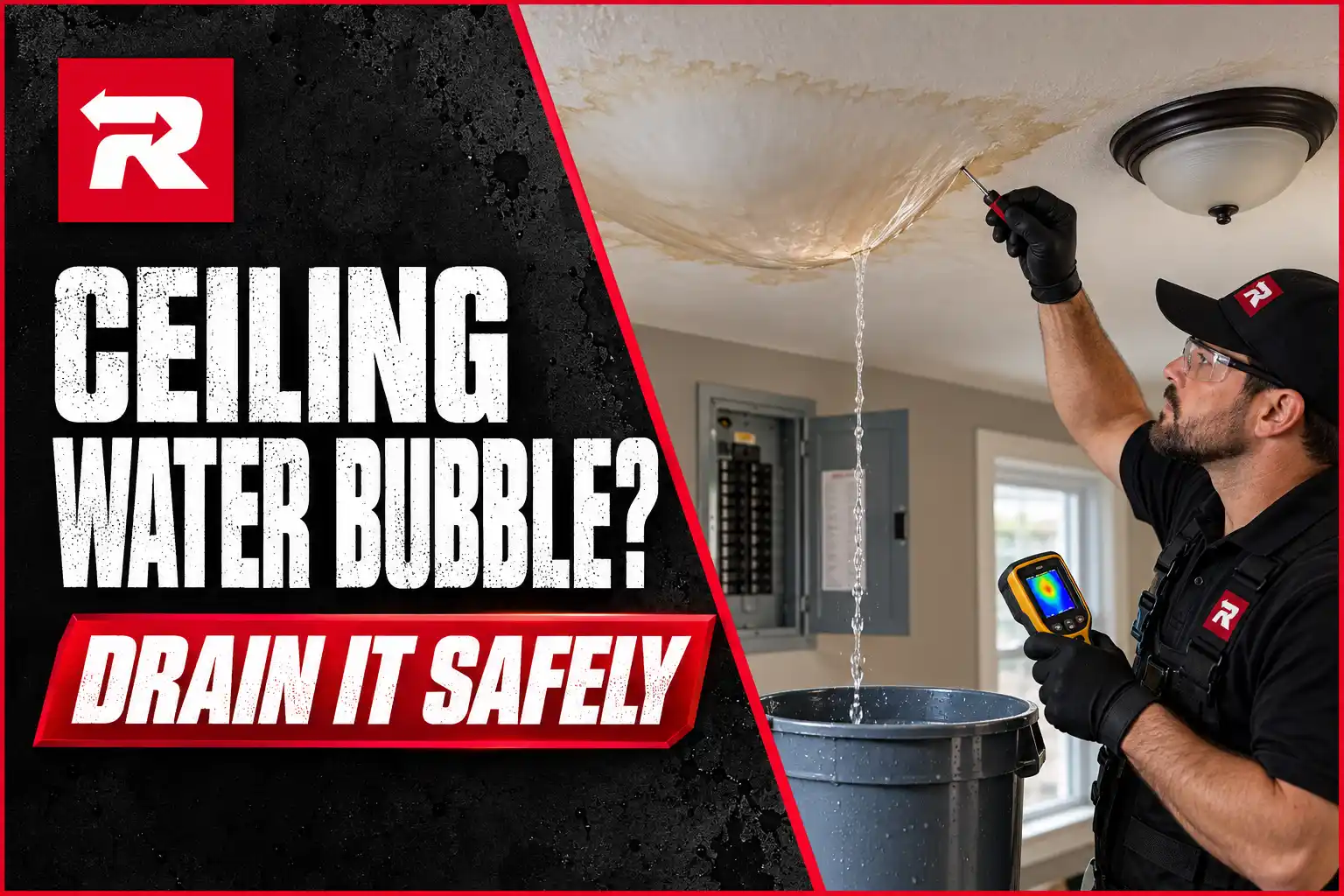
A homeowner called us last month about a small ceiling stain. A pipe under their second-floor bathroom had leaked. They caught it within an hour, shut off the water, and cleaned up everything they could see. The drywall looked dry by the end of the day. They ran a fan in the room overnight, just to be safe.
Three weeks later, they called us back. The corner of the bathroom smelled musty. Their bedroom wall had a dark spot that had not been there before. When we opened up the wall cavity, we found mold colonies covering the back of the drywall, the studs, and the insulation. What started as a minor plumbing repair was now a full mold remediation, drywall replacement, and reconstruction project.
This sequence is one of the most common calls we get. The homeowner did everything right by their own logic. They cleaned up the water. They monitored the area. They let it dry. The problem is that surface drying is not the same as structural drying, and the difference between the two is where the real damage lives.
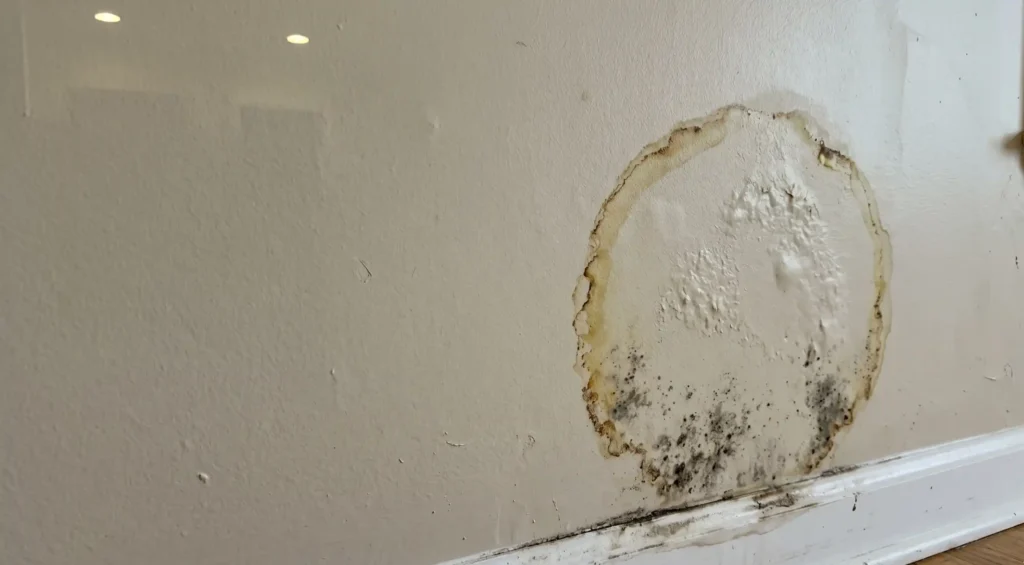
What Happens to Water Inside Your Walls
When water hits a wall, ceiling, or floor, the visible portion is only a fraction of what is actually present. Water travels through porous building materials almost immediately, soaking into drywall, insulation, subfloor, baseboards, and structural framing. Within hours, materials that look dry on the outside are saturated on the inside.
Drywall is particularly bad about hiding moisture. The paper backing on standard drywall absorbs water and holds it long after the surface paint feels dry to the touch. Insulation behind the drywall holds even more, sometimes for weeks, especially if there is no ventilation pulling moisture out of the cavity. Subfloor under wet flooring can stay damp for a month or more if the source water was significant enough.
Most homeowners have no way to detect this hidden moisture without professional equipment. A surface that feels dry, looks dry, and smells normal can still have moisture content well above the dry standard inside the wall cavity behind it.
The 48-Hour Mold Problem
Mold spores exist everywhere. They are in your home right now, in the air, on every surface, dormant and harmless. What activates them is sustained moisture. Most varieties of indoor mold begin germinating within 24 to 48 hours of being on a wet surface, and within 7 to 10 days they form visible colonies that you can see with the naked eye.
When mold grows inside a wall cavity, you typically do not see it until it has spread far enough to push through the drywall paper, stain the surface, or release enough volatile compounds to produce a noticeable smell. By that point, the colony has had weeks to develop. Removing it requires cutting out the affected drywall, treating the framing and adjacent surfaces, replacing the insulation, and reconstructing the wall.
This is the difference between a same-day water damage call and a six-week mold remediation. Both started from the same leak. The first one would have been resolved in a few days at a few thousand dollars, typically covered by insurance with minimal documentation. The second one becomes a multi-week project at ten times the cost, with insurance carriers far more likely to push back on coverage because the damage is no longer “sudden and accidental” by their definition.
What Real Drying Actually Looks Like
Professional water damage drying is not the same as running a household fan. We use industrial-grade dehumidifiers that pull moisture out of the air at rates household equipment cannot match. We deploy air movers strategically to direct airflow across wet surfaces and into wall cavities. We take moisture meter readings at multiple points every day until the readings confirm the structure is dry, not just the surface.
A typical residential water damage drying job takes three to seven days, depending on the volume of water, the materials affected, and the structural conditions. Throughout that time, our crews are documenting moisture readings, taking photos, and preparing the records that insurance carriers need to process the claim.
What Homeowners Should Do
If you experience any water event, even a small one, the right call is the same. Stop the source of water. Photograph everything before you clean anything. Then call a professional water damage company before you decide to handle the drying yourself.
A two-minute phone call costs nothing and can prevent a five-figure project six weeks from now. We will ask a few questions about the source of water, how much was spilled, what materials were affected, and how long it took you to respond. Based on those answers, we will tell you whether the situation actually needs professional drying or whether you can monitor it on your own.
When to Call Restorian
Restorian provides 24/7 emergency water damage restoration across New Jersey, New York, and Connecticut. Our IICRC certified crews are positioned at multiple points across the tri-state area for rapid dispatch. Every project is assigned a dedicated project manager who serves as your single point of contact from the first call through the final walkthrough. We work directly with your insurance carrier and prepare Xactimate certified documentation that adjusters recognize and trust.
If you have a leak, a burst pipe, an appliance failure, or any other water event, do not wait to see what happens. Call us at (888) 788-5038 or visit restorian.co for a free consultation.