Smoke damage is one of the most deceptive types of property damage a homeowner can face. The fire itself may have been small, maybe a stovetop flare-up that was out in minutes, maybe an electrical short that barely scorched a wall. But smoke does not stay in the room where the fire happened. It travels through every opening in the building, following airflow through doorways, vents, electrical outlets, and wall penetrations, depositing acidic soot and embedding odor molecules into every surface it touches.
Most homeowners underestimate how far smoke travels and how much damage it causes compared to the fire itself. In many cases, the cost of smoke and soot remediation exceeds the cost of repairing the actual fire damage. Understanding how smoke damage works and what to do about it can save you thousands of dollars and prevent permanent damage to your property and belongings.
We recently shared a quick version of these tips on our Google Business Profile, but this guide goes deeper into each one so you have a complete understanding of what smoke and odor removal actually involves.
1.Do Not Try to Clean Soot Yourself
This is the most common and most costly mistake homeowners make after a fire. The instinct to grab a rag and start wiping is natural, but it almost always makes the damage worse and more expensive to fix.
Soot is not dust. It is a complex mixture of carbon particles, oils, and chemical residue from burned materials. When you wipe soot with a regular cloth, paper towel, or household cleaner, you press those particles deeper into the surface. On painted drywall, the soot gets pushed into the paint film and cannot be removed without repainting. On natural stone countertops, it fills the pores and creates permanent discoloration. On upholstery and fabrics, it grinds into the fibers and sets the stain.
Professional soot removal uses dry chemical sponges that lift particles off surfaces without pressing them in, HEPA vacuums that capture loose particulate without spreading it, and chemical cleaning solutions specifically formulated for each surface type. What works on glass will damage wood. What works on metal will stain fabric. Each material requires a different approach, which is why professional technique matters.
2.Open Your Windows but Turn Off Your HVAC System
Fresh air ventilation helps reduce the concentration of airborne smoke particles and makes the space more tolerable while you wait for professional help. Open every window you can safely access to create cross ventilation.
But do not turn on your heating, cooling, or ventilation system. This is critical and many people get it wrong. If your HVAC system was running during the fire or in the hours after, smoke was actively pulled through the return vents, through the ductwork, across the blower motor and evaporator coils, and pushed back out through every supply vent in the building. The interior of your entire duct system is now coated in smoke residue.
Every time you run the system, it recirculates smoke particles and odor through the property, recontaminating surfaces that may have already been cleaned. In multi-unit buildings with shared or centralized HVAC systems, this problem is magnified because one contaminated system can affect multiple units or floors.
Keep the system off until a professional can inspect and fully decontaminate it. This includes cleaning all accessible ductwork, replacing filters, treating interior components with antimicrobial and deodorizing solutions, and verifying clean air output before the system goes back online.
3.You Have 48 to 72 Hours Before Soot Damage Becomes Permanent
Soot is acidic and corrosive. From the moment it settles on a surface, it begins a chemical reaction that gets worse with time. Within the first 48 to 72 hours, soot starts permanently etching glass surfaces, tarnishing metal fixtures and hardware, yellowing and discoloring painted walls, bonding to porous materials like wood, stone, grout, and fabric, and corroding electrical contacts and electronics.
During those first few days, most soot-affected surfaces can be professionally cleaned and restored to their original condition. After that window closes, those same surfaces may need to be completely replaced. A set of kitchen cabinets that could have been cleaned for a few hundred dollars now needs full replacement at thousands. A hardwood floor that could have been professionally cleaned now needs refinishing or replacement. Glass fixtures that could have been restored are permanently hazed.
This 48 to 72 hour window is why calling a professional restoration company immediately after a fire is so important. The financial difference between acting on day one and acting on day five can be tens of thousands of dollars in additional replacement costs.
4.Smoke Travels Much Further Than You Think
One of the most common reactions homeowners have after a fire is surprise at how far the smoke traveled. A fire that was contained to the kitchen somehow left soot on the bedroom ceiling fan. A fire on one floor deposited residue in rooms two floors away. How?
Smoke follows the path of least resistance through a building. It moves through open doorways, gaps under closed doors, HVAC ductwork, electrical outlet boxes that penetrate wall cavities, plumbing chases, and any crack or gap in the building envelope. In a single-family home, a kitchen fire can deposit soot inside closets, inside cabinets in other rooms, on ceiling fans in bedrooms, and throughout the attic if there is any air pathway between the rooms.
In multi-unit buildings like apartments, condos, and co-ops, smoke travels through shared HVAC systems, elevator shafts, hallways, and wall assemblies between units. A fire in one unit can contaminate common areas and units on entirely different floors. This is why professional smoke damage assessment always maps the full path of contamination before any cleaning begins, often finding significant soot deposits in areas that looked completely untouched at first glance.
5.Air Fresheners Will Not Eliminate Smoke Odor
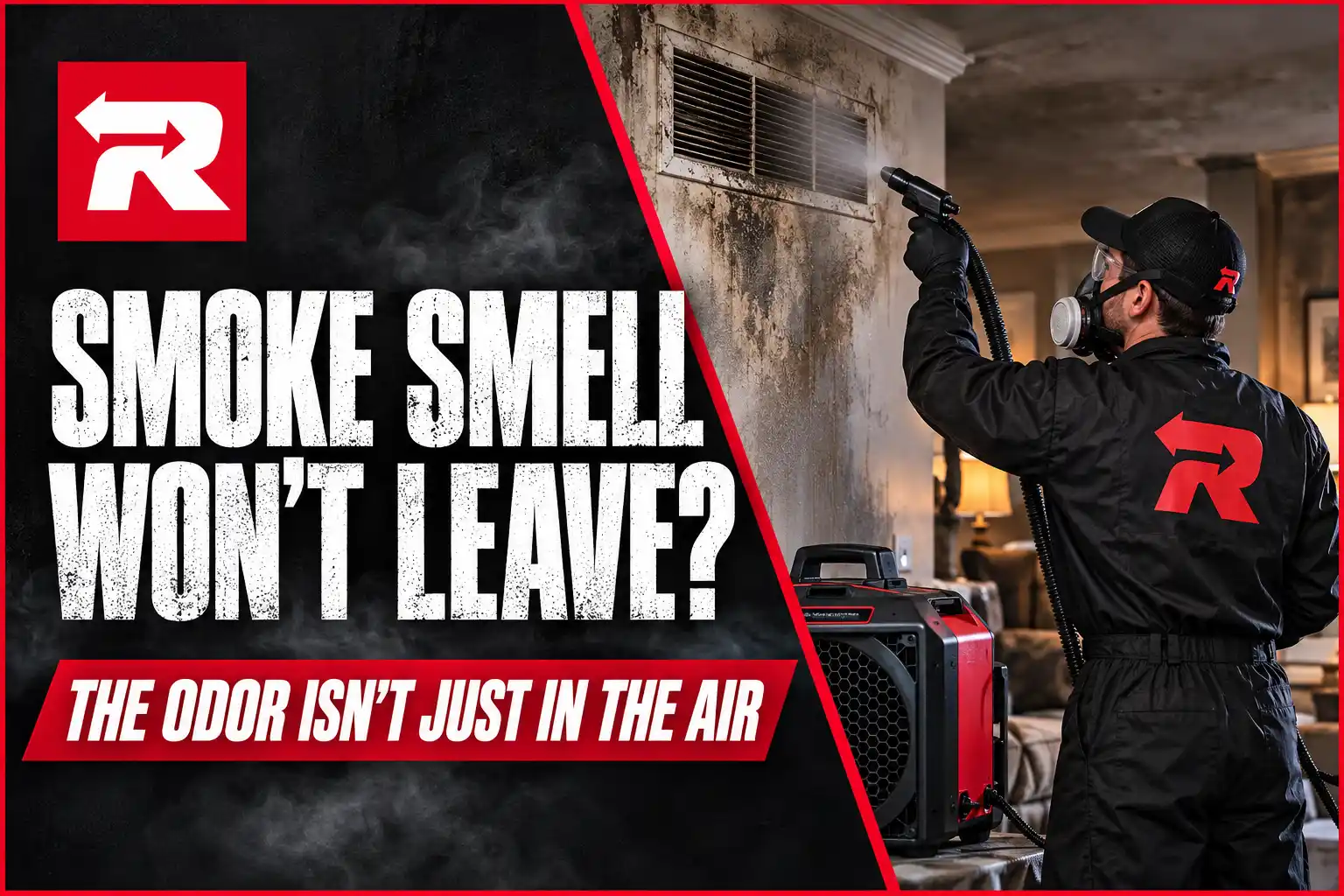
This is a hard truth that many homeowners learn the expensive way. No amount of scented candles, plug-in air fresheners, essential oil diffusers, or ventilation will permanently remove smoke odor from your property. These products mask the smell temporarily, but within hours or days it comes back because the source of the odor is still there.
Smoke odor molecules are not floating in the air. They are embedded deep inside porous building materials. Inside the paper backing of your drywall. Inside the wood grain of your framing and trim. Woven into the fibers of your carpet padding. Absorbed into the foam of your upholstered furniture. Trapped inside insulation in your wall and ceiling cavities. No surface spray, no air purifier, and no amount of ventilation can reach these embedded molecules.
Professional smoke odor removal uses two technologies that can. Thermal fogging produces a deodorizing vapor that penetrates wall cavities, fabric fibers, insulation, and every concealed space where smoke particles settled. It behaves the same way smoke did during the fire, reaching the exact same surfaces and cavities. Ozone treatment generates ozone molecules that chemically react with odor compounds and break them apart at the molecular level. The combination of these two methods achieves permanent odor elimination rather than temporary masking.
6. Your HVAC System Needs Full Decontamination
This is one of the most overlooked aspects of smoke damage restoration and the number one reason smoke odor returns after what seemed like a thorough cleanup. If your HVAC system was running during or after the fire, the interior of your ductwork, blower motor, evaporator coils, and filter housing are all coated in smoke residue.
You can clean every visible surface in your home, fog every room, treat every fabric, and the moment you turn the HVAC system back on, smoke particles blow back out through every supply vent and recontaminate the space. The smell returns within hours or days, and you are back to square one.
Professional HVAC decontamination after smoke damage includes cleaning all accessible ductwork, removing and replacing all filters, treating interior components including the blower and coils with antimicrobial and deodorizing solutions, and verifying clean air output with testing before the system goes back online. This step is not optional. It is essential to achieving a genuinely smoke-free property.
7.Your Insurance Likely Covers Smoke Damage
Most homeowners insurance policies cover smoke damage, and the coverage often applies even in situations you might not expect. If a fire in a neighboring apartment or adjacent property sent smoke into your home, your homeowners policy typically covers the resulting damage under your dwelling and personal property coverage, even though the fire did not occur in your home.
Smoke damage coverage generally includes professional cleaning and restoration of affected surfaces, replacement of materials that cannot be restored, HVAC decontamination, contents cleaning or replacement, and additional living expenses if the odor makes your property uninhabitable during restoration.
The key to a successful smoke damage claim is thorough documentation from day one. Photos, soot level measurements, odor assessments, affected area mapping, and detailed scope of work documentation all support your claim. Restorian handles the complete insurance process including Xactimate certified estimates that adjusters rely on, direct adjuster coordination, and direct billing to your carrier. We work with all major carriers including NJM Insurance Group, State Farm, USAA, Allstate, AIG, Progressive, American Family Insurance, Nationwide, Liberty Mutual, and Farmers Insurance.
Don’t Wait on Smoke Damage
Every day without professional treatment makes smoke and odor damage harder and more expensive to resolve. Surfaces that could have been saved on day one may need full replacement by day five. Odor that could have been eliminated with one treatment cycle may require multiple rounds after it has had weeks to penetrate deeper into building materials.
If your property has smoke damage from a recent fire, a neighboring fire, or even lingering odor from an older event that was never properly addressed, the fastest path to resolution is a single phone call.
Restorian provides 24/7 emergency smoke and odor removal across New Jersey, New York, and Connecticut. Our IICRC certified technicians handle everything from initial assessment through soot cleaning, thermal fogging, ozone treatment, HVAC decontamination, and any needed repairs or reconstruction under one team.
One call. Fast response. Full restoration.
📞 (888) 788-5038 🌐 restorian.co