In Tenafly, water damage restoration calls have a signature opening line: “it must have been running since this morning.” This is a commuter town of large, older homes that stand quiet from eight to six, and a supply line that lets go at 8:40 AM runs unwitnessed until someone’s key turns at dinnertime. If that was your evening: shut the water at the main (ours is one of the most-read guides for a reason, but the short version is the valve near the meter, usually at the front foundation wall), kill power to any room where water reached outlets or fixtures, photograph everything before you move a towel, and get professional drying started the same night, because the materials that make this town’s houses worth owning (plaster walls, original hardwood, solid-wood trim) are exactly the ones that reward speed and punish the weekend wait. Here is what those unwitnessed hours actually do to a house, what is savable and what is not, and what the first 24 hours of a proper response look like.
What Eight Unwitnessed Hours Actually Means
A burst supply line releases water at several gallons per minute. Nobody needs the multiplication written out: by the time the key turns, the event is not a puddle, it is a system. Water has crossed the floor, found the gaps at the baseboard and the registers, loaded the subfloor, and in a two-story house delivered the ceiling below its first stain. The visible water is the smallest share of it; the rest is in the floor assembly, the wall bases, and the cavities, which is why the honest name for the evening ahead is extraction and drying, not mopping.
Three clocks start at the moment of the break, not the moment of discovery. Hardwood begins cupping as its underside absorbs what its finished top cannot; plaster and drywall wick water upward by the hour, climbing well above the visible waterline; and the mold clock, 24 to 48 hours in saturated materials, has been running since morning. Discovery at 6 PM does not mean the clocks read zero; it means a third of the first one is already spent.
Water Damage Restoration in Tenafly: What’s Different Here
Tenafly’s housing is the kind restoration crews treat with respect bordering on reverence: generous prewar and midcentury homes, plaster-and-lath walls, original oak and chestnut floors, trim that no lumberyard stocks anymore. That stock changes the playbook in three ways.
First, the materials are worth fighting for, and they respond to speed. Plaster that modern schedules would condemn can often be dried in place with controlled, monitored drying; original hardwood that gets specialty drying mats within the first day frequently flattens back instead of needing replacement. The same materials, left to a fan-and-wait weekend, are demolition.
Second, the houses are large and the leaks are patient. More square footage means more unwitnessed hours of travel, and basements here are finished: media rooms and home offices, which turns basement flooding in Tenafly into a contents event as much as a structural one.
Third, the commuter rhythm is the risk profile. Houses that stand empty all day are why we preach the cheap defenses in every talk we give in the Northern Valley: leak sensors under sinks and behind the washer, supply valves closed before trips, and knowing the main. When the defenses lose anyway, our crews come from Englewood Cliffs, minutes away: the details are on our Tenafly service page, and (888) 788-5038 answers at any hour, from any decade of house.
The First 24 Hours of Water Damage Restoration, Done Right
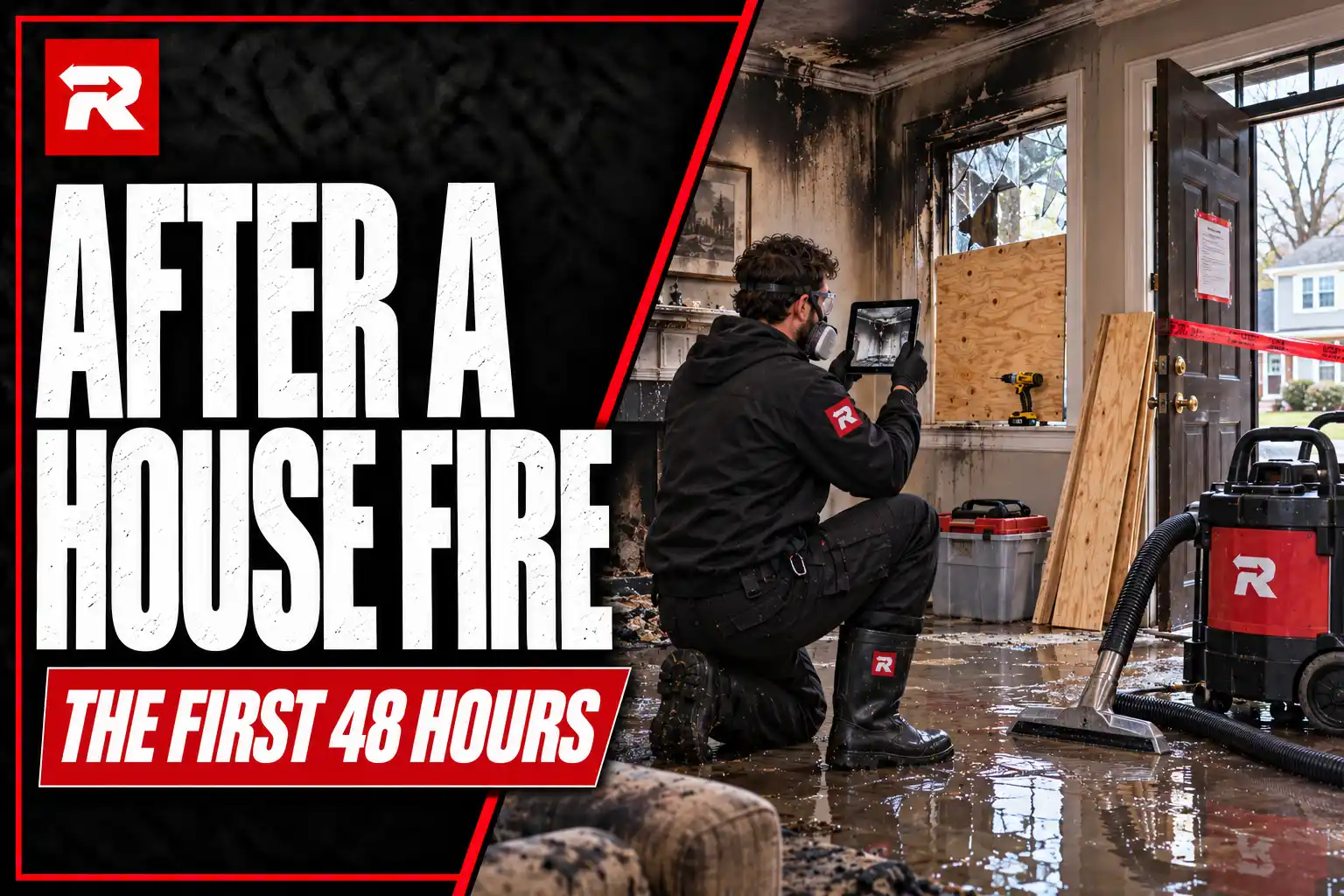
Hour zero: stop and secure. Main valve closed, power cut to affected rooms at the breaker (water at outlets, in light fixtures, or under appliances makes this non-negotiable), and photographs of every room, the waterline, and the source before anything is moved. The claim is built from this record.
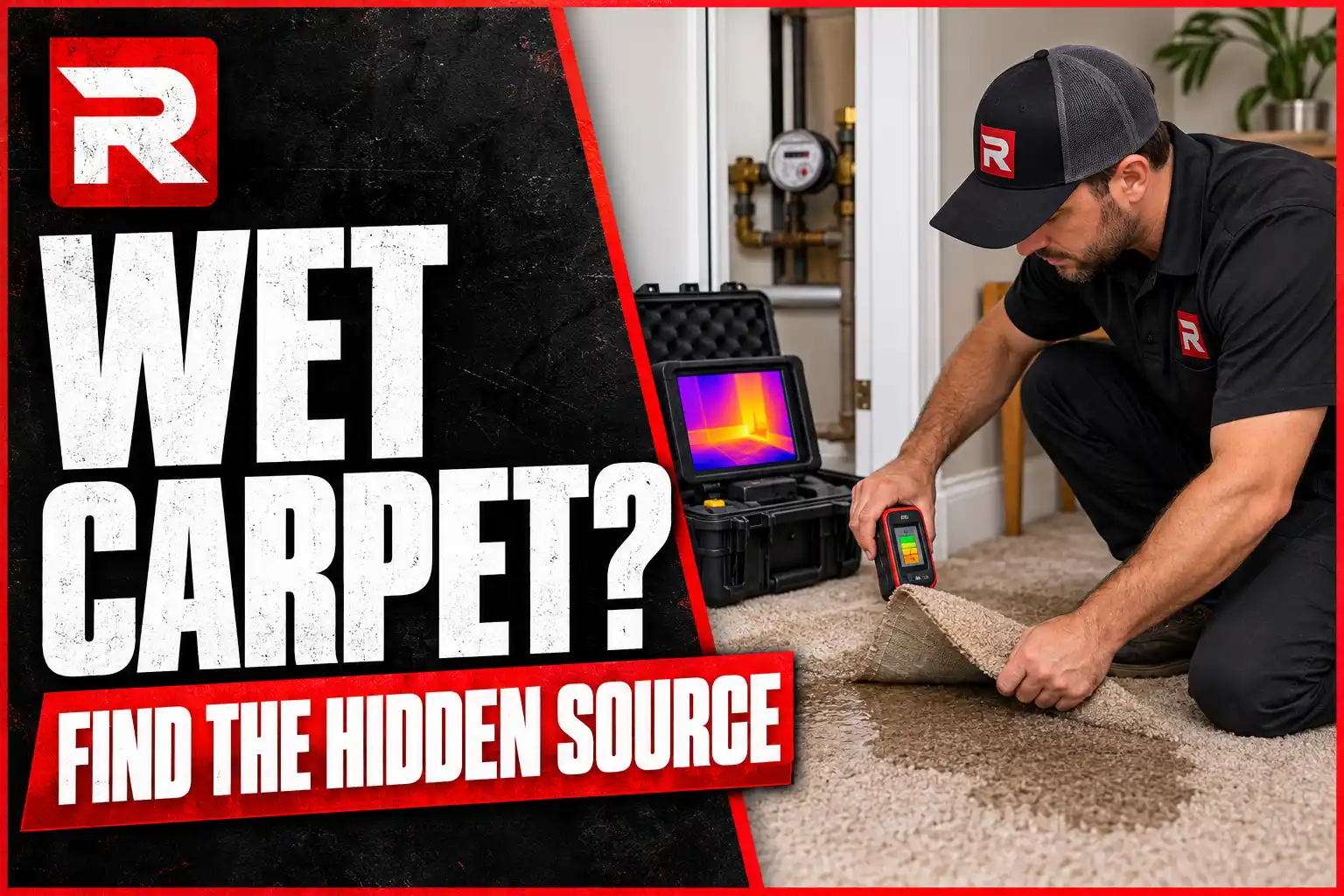
Hours one through four: extraction. Truck-mounted extraction pulls standing water from floors and carpets at a rate no shop vac approaches, and the difference matters precisely because of the clocks above. This is also when the moisture mapping happens: meters and thermal imaging tracing how far water actually traveled, which is reliably further than it looks, through wall bases, under flooring, along joists to the ceiling below.
Hours four through twenty-four: the drying plan. Air movers and dehumidifiers are placed by the map, not by intuition; specialty mats go onto hardwood worth saving; wall cavities get vented or injected where the map demands it; and every decision about what stays versus what gets removed follows the material and the water category, not the panic. Clean supply water that moved fast is the most forgiving scenario in this business, provided the response was fast too. From there, structural drying runs on daily meter readings until the numbers, not the nose, say done, and water damage repair (the rebuild of what could not be saved) is scoped from the same documentation.
The arithmetic of this day is stark: the difference between drying started at 7 PM and drying started Monday is routinely the difference between a repair measured in days and a renovation measured in months. Our cost guide puts numbers to that spread.
What’s Savable (the Honest List for Older Homes)
Original hardwood: often, if drying mats arrive within roughly a day; cupped boards frequently relax as moisture equalizes, and sanding rescues more than owners expect. Plaster: more resilient than drywall when dried promptly and monitored, which is one of the pleasures of working in houses like these. Drywall: cut above the waterline when soaked; it wicks and does not forgive. Carpet pad: never; the carpet itself, sometimes. Solid-wood furniture: usually, wiped and dried slowly away from heat. Particleboard: no, once it swells it is done. Books and paper: triage fast, because the irreplaceable ones can be freeze-dried if they reach a specialist quickly. Rugs over hardwood: lifted immediately, because trapped moisture prints their outline into the floor beneath, and a good rug deserves its own proper drying anyway.
And the insurance note that pairs with the list: a burst line is the textbook sudden-and-accidental loss, typically covered including tear-out, drying, and water damage repair, minus the deductible. The documentation from hour zero is what makes that smooth, and we prepare Xactimate estimates and bill carriers directly through our water damage restoration service, across Tenafly and all of Bergen County.
The Cheap Defenses for a House That Stands Empty All Day
The postscript every one of these jobs ends with, worth reading on the calm day instead: the unwitnessed leak is the one loss category you can buy your way out of for less than a dinner out. Leak sensors under every sink, behind the washing machine, and beside the water heater cost a few dollars each and turn an eight-hour flood into a phone alert at 8:41 AM. A smart water shutoff on the main goes further, closing the valve itself when flow looks wrong, and insurers increasingly discount for them. The analog versions still work too: supply valves closed before trips, no laundry or dishwasher running after the door locks, and every adult in the house able to find the main valve without a flashlight tour. None of it is glamorous, and all of it is cheaper than the first hour of the alternative.
The Bottom Line
The leak that ran all day is this town’s signature loss, and it is beatable: main valve, breaker, photographs, and professional extraction the same night, because the plaster and hardwood that make these houses what they are reward the owner who refuses to wait until Monday. For water damage restoration in Tenafly, the crews are minutes away in Englewood Cliffs, the response runs around the clock, and the first assessment is free: Restorian, (888) 788-5038.
Frequently Asked Questions
Who does water damage restoration in Tenafly, NJ? Restorian serves Tenafly from its Englewood Cliffs headquarters, minutes away, with 24/7 emergency response: extraction, moisture mapping with meters and thermal imaging, structural drying monitored to verified numbers, mold prevention, and the rebuild, under one project manager with direct insurance billing. The first assessment is free, and in a town of plaster walls and original hardwood, the same-night start is the whole game: (888) 788-5038.
What should I do first if a leak ran all day while I was out? Four moves, in order: close the main water valve (near the meter, usually at the front foundation wall), cut power at the breaker to any room where water reached outlets, fixtures, or appliances, photograph every affected room and the waterline before moving anything, and get professional extraction started the same night. The mold clock (24 to 48 hours in saturated materials) started when the leak did, not when you found it, so the evening response is worth more than the weekend one.
Can original hardwood floors be saved after water damage? Often, yes, and speed decides it. Hardwood cups as the underside absorbs moisture, but boards that get specialty drying mats within roughly the first day frequently flatten back as moisture equalizes, and sanding finishes the rescue. The same floor after a fan-and-wait weekend is usually a replacement. Rugs come up immediately (they print their outline into the wood), and drying is monitored by meter readings so the floor neither stays wet nor dries too fast.
Is plaster better than drywall after a flood? Usually, and it is one of the advantages of Tenafly’s older stock. Plaster dried promptly under controlled, monitored conditions often survives what would condemn drywall, which wicks water upward and loses integrity when soaked (soaked drywall gets cut above the waterline). The key phrase is promptly and monitored: plaster left wet behind paint grows mold like anything else, so the cavity gets mapped and verified, not assumed.
Does insurance cover water damage from a burst pipe? Typically yes: a burst or failed supply line is the classic sudden-and-accidental loss, and homeowners policies generally cover the resulting damage (extraction, drying, tear-out, and water damage repair), minus the deductible, though not usually the failed part itself. The claim rides on documentation: photographs before cleanup, the plumber’s cause-of-loss finding, and early moisture readings. We prepare Xactimate certified estimates and bill carriers directly.
How do I find good water damage restoration near me? Three filters sort the field fast: response time you can verify (ask where the crew actually dispatches from; ours is Englewood Cliffs, minutes from Tenafly), drying verified by daily meter readings rather than look and smell, and documentation built for your insurance claim (photographs, moisture maps, Xactimate estimates). A company that hesitates on any of the three is planning to dry your house by hope. We answer all three at (888) 788-5038, around the clock.