After a burst pipe, sewage backup, or storm flood, the visible water is the smallest part of the problem. By the time floors look dry and walls feel dry to the touch, moisture has already moved into wall cavities, subfloors, insulation, and structural framing where it cannot be detected without professional equipment.
This is the moisture that causes mold growth 48 to 72 hours later, warped hardwood floors and buckled trim that show up two to three weeks later, structural rot that takes months to become visible, and insurance claim denials when adjusters find inadequate documentation of the actual drying process.
Professional structural drying is the difference between solving the problem and creating a much larger problem six months later. Here’s what most property owners do not know about how it actually works.
The 72-Hour Mold Window That Most People Miss
The most important number in water damage response is 72 hours. That is the window during which mold spores already present in indoor air can colonize wet materials and begin actively growing. Once mold establishes, removal requires full containment, IICRC certified mold remediation protocols, and clearance testing, which costs significantly more than preventing the mold in the first place.
The catch is that the 72-hour clock starts when water contacts the material, not when you first see the water. A slow leak under a kitchen sink, a sewage backup that occurred while you were away, or a basement flood that started overnight may already be deep into the danger window before anyone notices.
This is why response time matters so much for water damage, but response time without proper drying technique just means a faster start to a still-inadequate process. The water gets extracted, the surfaces look dry, and the homeowner thinks the emergency is over. The moisture in the wall cavity behind the baseboard, in the insulation under the floor, and in the subfloor under the carpet pad continues to support mold growth invisibly for weeks.
Restorian’s water damage restoration protocol explicitly addresses this with moisture meter readings at multiple depths and infrared thermal imaging that detects hidden wet areas before they become mold problems.
What Surface Drying Actually Misses
When water-damaged property dries on its own, evaporation pulls moisture from the surface outward. The visible surfaces dry first. The deeper material, including drywall cores, subflooring, wall cavities, structural framing, and insulation, dries last and sometimes never fully dries without intervention.
A typical scenario looks like this. A second-floor bathroom supply line bursts overnight while the family is asleep. Water travels down the wall into the kitchen ceiling below, then down the kitchen wall into the finished basement playroom. The homeowner shuts off the water in the morning, mops up what they can see, runs a household dehumidifier and a few fans, and assumes the problem is solved when surfaces feel dry three days later.
What actually happened. The drywall in the kitchen ceiling absorbed water through its paper backing, soaked the gypsum core, and remained wet at 70 percent moisture content while the painted surface dried first. The fiberglass insulation in the wall cavity absorbed water, lost most of its R-value, and became a damp medium for mold growth. The subflooring under the kitchen tile absorbed water through the grout lines and remained wet for weeks. The carpet pad in the basement playroom held water against the concrete slab.
Three weeks later. The kitchen ceiling develops a stain that the homeowner assumes is from a separate small leak. The carpet in the basement develops a musty smell that air fresheners cannot fix. Six weeks later. The hardwood floor in the kitchen starts to cup at the edges. Three months later. Mold testing shows elevated spore counts in the home, and the insurance company denies the secondary damage claim because the original water event was not properly documented and dried.
This is the scenario professional structural drying prevents.
How Professional Structural Drying Actually Works
The professional protocol has four phases, and skipping any of them creates the problem described above.
Phase 1: Inspection and Moisture Mapping
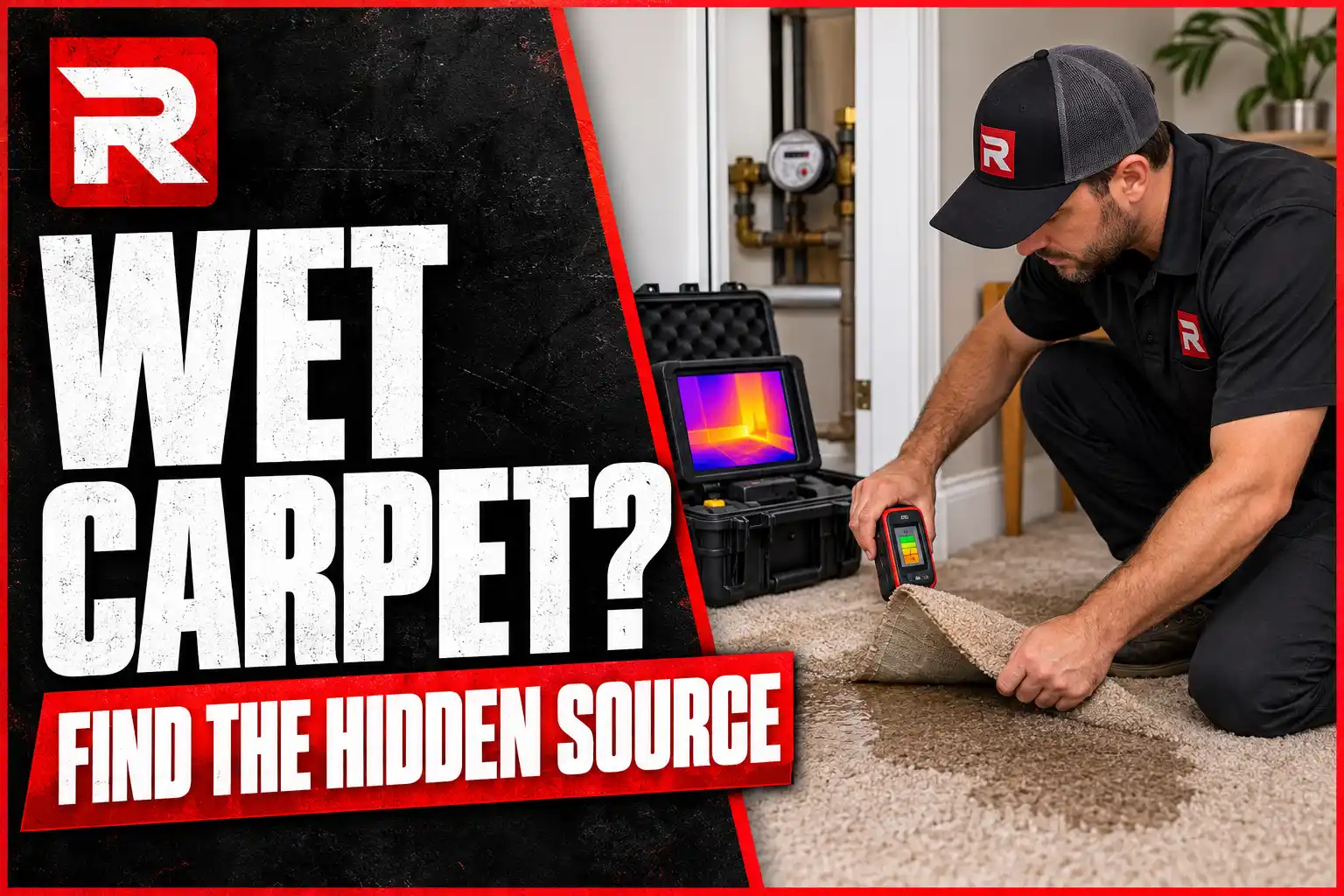
Before any drying equipment is set, the affected area is inspected with calibrated moisture meters that read moisture content at multiple depths through walls, floors, and ceilings. Infrared thermal imaging cameras identify temperature differentials that indicate hidden wet areas behind finished surfaces. The technician maps the actual extent of moisture migration, which is almost always larger than the visible damage.
This inspection produces the baseline moisture readings that document the starting point for insurance carriers. Without this documentation, an adjuster has no way to verify what was actually wet and what was dried, which is a frequent reason secondary damage claims are denied.
Phase 2: Water Extraction
Industrial truck-mounted extraction equipment removes standing water and embedded water from carpet, padding, and porous materials at hundreds of gallons per minute. This is significantly faster than the wet-vac or shop-vac equipment available to homeowners, and the extraction rate matters because every minute of additional contact time means more water absorbed by porous materials.
Truck-mounted extractors also handle Category 2 (gray water) and Category 3 (black water) contamination with sealed waste containment, which household equipment cannot do safely.
Phase 3: Active Drying with Industrial Equipment
This is where the work that matters happens. Professional structural drying uses three categories of equipment working together.
Industrial dehumidifiers remove moisture from the air at significantly higher capacity than household units, typically 80 to 150 pints per day for refrigerant units and far more for low-grain refrigerant or desiccant units. The dehumidifier reduces the air’s moisture content, which creates the vapor pressure differential that pulls moisture out of wet materials.
Axial air movers (high-velocity fans) increase airflow across wet surfaces. This evaporates surface moisture and replaces the saturated boundary layer of air immediately next to wet materials with drier air from the dehumidifier output. Without air movement, even a powerful dehumidifier cannot dry materials because the air against the wet surface stays saturated and stops absorbing moisture.
Specialty equipment addresses specific scenarios. Heat drying systems accelerate evaporation in scenarios with wet hardwood floors that need rapid drying to prevent permanent cupping. Wall cavity drying systems force dry air behind baseboards or through small access holes to dry inside wall cavities without removing drywall. Floor drying mats pull moisture from hardwood floors without surface heat damage.
The number, type, and positioning of equipment is calculated based on the affected square footage, the type of materials involved, and the moisture content readings. This is not guesswork, and it is not “set up a few fans.” Inadequate equipment produces inadequate drying.
Phase 4: Daily Monitoring and Documentation
Drying is not finished when surfaces feel dry. It is finished when moisture content readings at multiple depths return to dry standard for each material type, which is typically 15 to 17 percent for wood and below 1 percent for concrete and gypsum. Restorian crews return daily during the drying period to take new readings, adjust equipment positioning, and document the progress.
The daily moisture readings produce the documentation that proves to insurance carriers the property was actually dried to dry standard. This documentation is the difference between a fully covered claim and a denied secondary damage claim three months later when mold appears.
Why DIY and Inadequate Drying Cost More in the Long Run
The homeowner who runs a household dehumidifier and a couple of fans is doing approximately 10 percent of what professional drying does. The dehumidifier captures some atmospheric moisture but cannot create the vapor pressure differential needed to pull moisture out of saturated drywall and framing. The fans move some air but at velocities far below what creates evaporative drying through porous materials.
The hidden cost shows up later. Mold remediation that becomes necessary because initial drying was inadequate often costs three to five times the original water damage restoration cost. Structural repairs to warped flooring, buckled trim, and rotted framing become necessary when adequate drying was not done. Secondary insurance claims for mold and ongoing damage are routinely denied because the original water event was not documented to professional standards.
Restorian crews carry Xactimate certified documentation, moisture content readings, and daily monitoring records for every project, which is the documentation insurance carriers require for full coverage of both the original event and any related claims.
When Structural Drying Is Required (And When Surface Drying Is Enough)
Not every water event requires the full professional drying protocol. A small spill on hardwood that you mop up within minutes does not need anything more than letting it dry. A slow leak that wet a small area of drywall but was caught immediately may dry adequately with normal household ventilation.
The threshold for professional intervention is generally:
- Water that affected more than 10 square feet of porous material
- Water that penetrated wall cavities, subflooring, or insulation
- Any sewage or contaminated water event regardless of size
- Any water that sat for more than 24 hours before extraction
- Any event involving hardwood floors, finished basements, or premium finishes
- Any event you intend to file an insurance claim for
If any of those apply, professional structural drying is what prevents the bigger problems three weeks, three months, or one year later.
What to Look for in a Structural Drying Provider
The technical capabilities and documentation matter more than the cleanup work itself when you are dealing with insurance claims and long-term property value.
A qualified structural drying provider should have IICRC certified technicians, industrial dehumidifiers and axial air movers (not just basic equipment), moisture meters and infrared imaging for inspection and documentation, Xactimate certified estimating for insurance coordination, daily monitoring throughout the drying period with documented readings, and clearance documentation showing dry standard reached.
Beyond credentials, look for crews who explain what they are doing and why. Property owners who understand the actual drying science make better decisions and end up with better outcomes, both for the immediate restoration and for any insurance coordination.
Restorian crews handle structural drying across northern and central New Jersey, all five boroughs of New York City, lower Westchester County, and southwestern Connecticut, with 24/7 emergency response and direct insurance carrier coordination. If you have water damage now and want to make sure it is dried properly the first time, call (888) 788-5038 or learn more about our structural drying services.