If your home survived this past winter without an obvious pipe burst, you might think you dodged the bullet. You probably didn’t. Some of the most expensive water damage claims we handle at Restorian come from homeowners who never noticed a winter freeze event because the pipe didn’t fail catastrophically. Instead, the cold weather created hairline cracks, weakened joint seals, or hidden pinhole leaks that quietly let water seep into walls, ceilings, and subfloors over the following weeks and months. By the time the damage becomes visible, the bill is already five figures. Late spring is when this hidden damage finally announces itself, and it’s also the last window to find it before warm-weather pressure increases turn slow leaks into fast ones. Here’s what every homeowner should inspect right now, and what to do if you find a problem.
Why Hidden Pipe Damage Shows Up in Late Spring, Not Winter
When residential water pipes freeze, the standard outcome that homeowners worry about is the catastrophic burst: a pipe ruptures wide open, water sprays everywhere, you call for emergency response. That happens, and we respond to those events constantly during cold snaps. But the more insidious outcome is the partial freeze, where ice forms inside the pipe, expands enough to stress the metal or plastic, then thaws without the pipe fully bursting.
What’s left behind is a weakened pipe. Microscopic cracks along the pipe wall, stressed joint seals where solder or compression fittings shifted under freeze pressure, hairline splits in older copper, weakened crimp connections in PEX systems. None of these failures are visible to a homeowner. The pipe still holds water and pressure for the rest of winter. But the damage is real, and it slowly worsens as the home’s plumbing system continues to cycle through pressure changes, temperature variations, and normal daily use.
By late spring, three things accelerate the problem. First, warmer ambient temperatures cause minor pipe expansion that opens hairline cracks slightly wider. Second, increased outdoor water use (lawn irrigation, hose connections, pool fills) increases system pressure throughout the home. Third, homeowners stop monitoring for cold-weather plumbing issues and stop paying attention to the early warning signs.
The result: a damaged pipe that quietly held through winter starts leaking in May or June. By the time the homeowner notices, water has been seeping behind walls or under floors for weeks.
6 Places to Inspect This Week
You don’t need to be a plumber to do a meaningful post-winter inspection. Most hidden pipe damage shows itself through visible secondary symptoms if you know where to look.
1. Behind toilets and under bathroom sinks. Use a flashlight to inspect supply lines, shutoff valves, and the floor area under and around the toilet base. Look for discoloration on baseboards, soft spots in the floor, or any sign of moisture you don’t remember being there. Check for water stains on the underside of vanities and around pedestal sinks.
2. Inside kitchen base cabinets. Pull out everything under your kitchen sink and inspect the cabinet floor, the back wall, and the supply lines feeding the faucet and dishwasher. Look for discoloration, swelling of the cabinet bottom, or any sign of dampness. Kitchen sink leaks are extremely common after winter freezes because the supply lines often run through exterior walls.
3. Around the water heater. Check the floor pan and the area immediately around your water heater for any sign of moisture or rust staining. Inspect supply line connections at the top of the unit and the drain valve at the bottom. Water heaters are not pipes themselves, but they connect to the home’s main water lines and often reveal pipe damage near the utility room.
4. The exposed plumbing in your basement or crawlspace. Walk along every visible run of pipe with a flashlight. Look for water stains on the pipe itself, mineral buildup that suggests slow leakage, discoloration on the surrounding wall or joist, or any visible moisture at joints, elbows, and fittings.
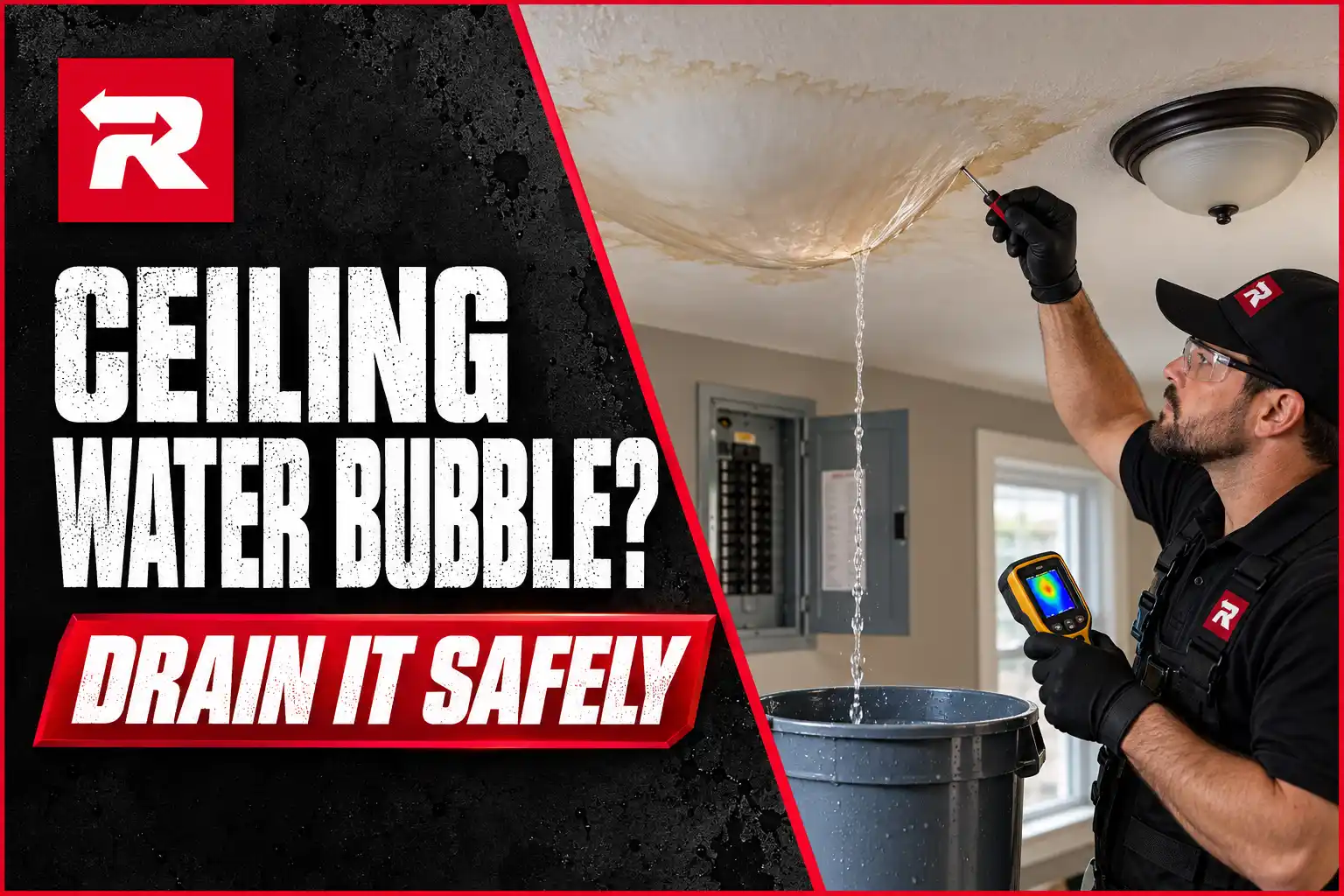
5. The ceiling under upstairs bathrooms. Stand directly underneath any second-floor bathroom and inspect the ceiling for staining, discoloration, slight sagging, or paint that’s started to bubble or peel. Slow leaks from second-floor plumbing usually appear in the first-floor ceiling weeks before any visible water shows.
6. Outdoor hose bibs and exterior wall plumbing. Check the area around every outdoor faucet, both inside the home (behind walls) and outside. Look for staining on the exterior siding below or near the faucet. Hose bibs are notorious for freeze damage that doesn’t show until the homeowner turns the water back on in spring.
Warning Signs Beyond Visible Water
Even if you don’t see actual water or staining, certain symptoms strongly suggest hidden pipe damage that needs immediate attention.
Higher water bill with no explanation. If your water bill has crept up over the past few months without any change in household usage, you almost certainly have a leak somewhere. The leak might be too small to notice but large enough to register on the meter.
Musty smell in any room. Persistent musty odors, especially in basements, bathrooms, or rooms with plumbing behind walls, suggest moisture has been present long enough for mold to start growing. The smell is often the only early warning sign of a slow leak inside a wall cavity.
Cold or warm spots on floors and walls. If you walk barefoot across a floor and notice a section that feels noticeably colder or warmer than surrounding areas, you may be feeling moisture that’s wicking through the subfloor or wall from a hidden leak.
Sudden increase in humidity. If your home feels more humid than usual, especially during normally dry weather, water is getting in somewhere. The leak could be from plumbing, but could also indicate roof damage or foundation seepage.
Reduced water pressure. A sudden or gradual drop in water pressure throughout the home, or at one specific fixture, often indicates a leak somewhere in the supply line system. The leak is releasing pressure that should be available at the tap.
What to Do If You Find a Problem
If your inspection turns up any sign of active leakage, hidden moisture, or pipe damage, the response timeline matters significantly.
For active visible water, shut off the main water supply to your home immediately, then call a professional. Do not wait to call thinking you’ll save money on the call. Every hour that water continues damaging building materials raises the eventual claim cost dramatically. Restorian responds 24/7 across New Jersey, New York, and Connecticut for emergency pipe burst cleanup and can have a crew on site within 30 to 90 minutes depending on your location.
For suspected hidden damage with no visible water, contact a licensed plumber to diagnose and address the specific pipe issue. Once the source is addressed, water damage restoration crews can assess the secondary damage to walls, ceilings, subfloors, and contents. Professional moisture meters and infrared imaging detect hidden moisture that’s not visible to the naked eye.
For situations where you’ve identified persistent musty odors but no obvious leak source, mold remediation specialists can identify whether mold has already started growing inside wall cavities and what the scope of remediation looks like.
When to Call Restorian
Restorian provides 24/7 emergency pipe burst cleanup and water damage restoration across New Jersey, New York, and Connecticut. IICRC certified crews, EPA-registered antimicrobial treatment for hidden moisture areas, Xactimate certified insurance documentation, and a dedicated project manager from emergency response through final reconstruction.
We coordinate directly with all major insurance carriers including NJM Insurance Group, State Farm, USAA, Allstate, AIG, Progressive, American Family Insurance, Nationwide, Liberty Mutual, and Farmers Insurance. Crews are positioned at multiple points across the service area for rapid dispatch when pipe burst and slow leak events spike during the late spring discovery window.
If you have any indication of pipe damage, hidden moisture, or sudden water bill changes, call (888) 788-5038 or visit restorian.co/pipe-burst-cleanup for immediate professional assessment.