Spring storm season across New Jersey, New York, and Connecticut is one of the most active and unpredictable periods of severe weather every year. Most homeowners associate property damage with hurricanes and winter ice storms, but spring storms cause more total residential property damage in the tri-state area annually than either of those categories. Severe thunderstorms with damaging winds, hail, microbursts, tornado activity, and saturated ground conditions create a damage profile that is both more frequent and harder to predict than any other season. Understanding what spring storms do to homes, what to expect during a typical event, and what to do when storm damage hits your property can mean the difference between a routine insurance claim and a months-long restoration project. Restorian responds to storm damage events across the entire tri-state area, and this is what we see every spring.
The Spring Storm Damage Profile in the Tri-State Area
Spring storms differ from hurricanes and winter weather in several important ways. Hurricanes are tracked days in advance and produce relatively predictable damage patterns. Winter storms produce ice damming, frozen pipe damage, and gradual snow load issues that develop over hours or days. Spring storms produce damage in minutes from causes that change rapidly across short distances. A severe thunderstorm passing through Bergen County might drop hail in Paramus while producing damaging straight-line winds in Hackensack and a brief tornado in Westchester County all within an hour.
The tri-state area sees several distinct types of spring storm damage, each requiring different response approaches:
Wind damage from severe thunderstorms often produces the highest property damage volume of any single category. Sustained winds of 50 to 70 mph during a typical line of storms can rip shingles off roofs, push fallen trees onto homes, fail garage doors, and force wind-driven rain into spaces that normally stay dry.
Hail damage affects roofing, siding, gutters, vehicles, and skylights. Hail events in the tri-state are less frequent than in the Midwest but more impactful when they occur because most homes are not built with hail-rated materials.
Tornado activity is rare but real across the tri-state area. The National Weather Service typically issues 5 to 15 tornado warnings annually for parts of NJ, NY, and CT during spring months, and confirmed tornadoes do occur even when the touchdowns are brief.
Saturated ground flooding results from heavy rain falling on soil already saturated from previous storms. This is the most common cause of basement flooding during spring season and is often missed by insurance carriers because the homeowner assumes their basic policy covers it (most standard policies exclude rising groundwater).
Microbursts are localized severe wind events that produce hurricane-force winds across a limited area. Often confused with tornadoes initially, microbursts can produce 100+ mph winds across a half-mile radius, leaving severe damage along a narrow path.
Roof Damage Is the Most Common Spring Storm Loss
Of all the property damage scenarios spring storms produce, roof damage is the most common and often the most underestimated. A few missing or damaged shingles after a storm might not seem like an emergency, but the consequences of leaving roof damage unaddressed for even a few weeks can be severe.
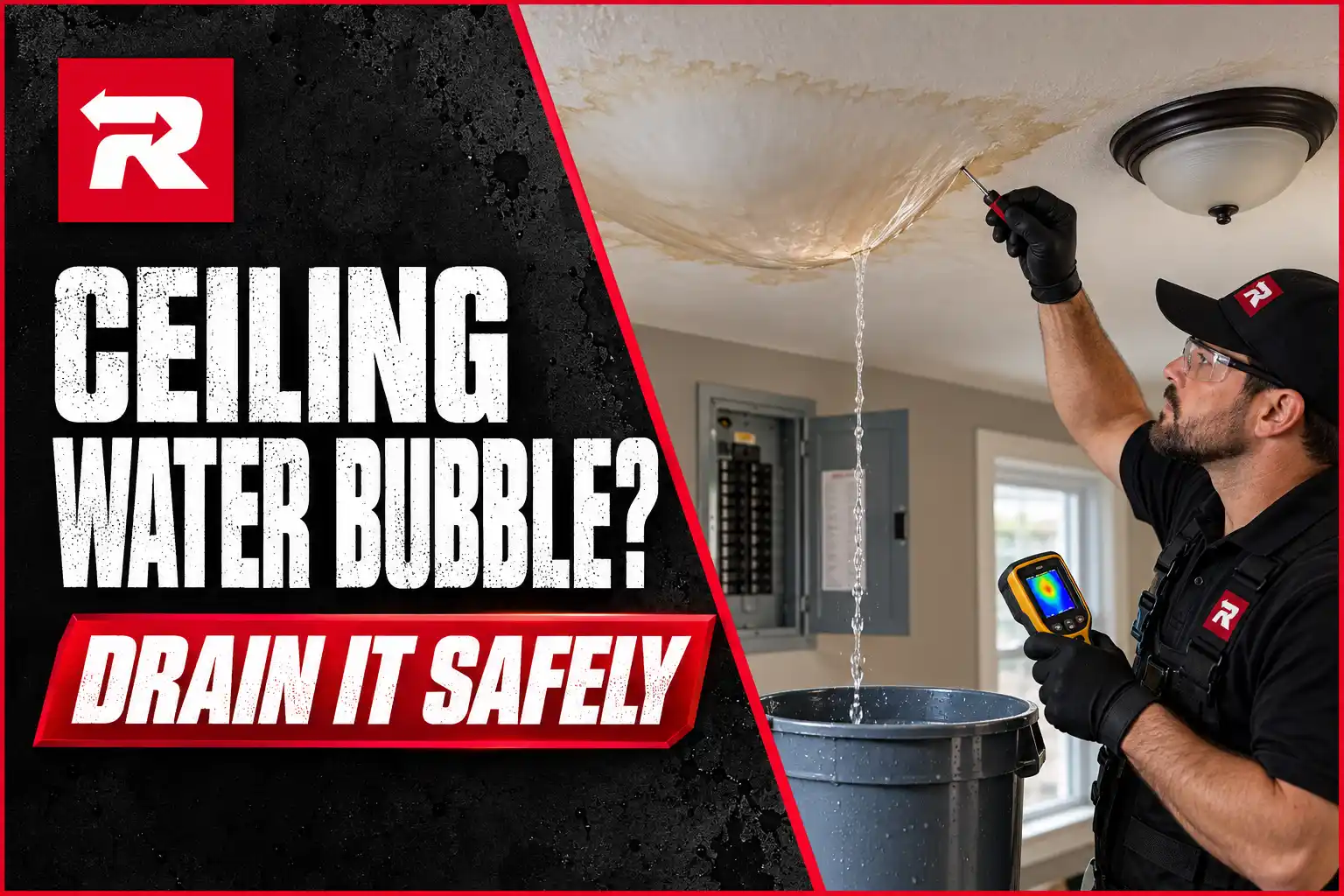
Wind-driven rain finds every gap in compromised roofing. Water enters through missing shingles, damaged flashing, or lifted edges and travels along framing, soaks into insulation, and drips through ceilings often far from the original entry point. By the time the homeowner notices ceiling stains or wet attic insulation, water has been spreading invisibly for days or weeks.
Spring is also the season when winter damage that has been hidden by snow finally becomes visible. Ice dam stress on flashing, shingle granule loss from freeze-thaw cycles, and gutter damage from heavy snow load all reveal themselves during the first major spring rain event. A homeowner who thought their roof was fine through winter often discovers spring damage that actually started months earlier.
When roof damage occurs during a storm event, the immediate response priority is preventing additional water from entering the structure. Restorian’s board up services include emergency tarping for damaged roof sections, plywood boarding for broken windows, and full structural securing to prevent further water intrusion until permanent repairs can begin. Tarping a damaged roof within hours of a storm can prevent thousands of dollars in additional water damage that would otherwise develop over the following days.
Basement Flooding From Saturated Ground Conditions
Spring is the highest-risk season for basement flooding across the tri-state area, and the reasons differ from what most homeowners expect. Hurricane Sandy in 2012 and Hurricane Ida in 2021 created memorable flooding events in many tri-state communities, but those storms are rare. Most basement flooding happens during ordinary spring rain events when the ground is already saturated from previous precipitation and cannot absorb additional water.
When the soil around a foundation is fully saturated, hydrostatic pressure forces water through every crack, joint, and weak point in the foundation. Water enters through floor seams, foundation cracks, window wells, sump pump pits, and around utility penetrations. The volume of water that enters is determined by the pressure outside the foundation, not by how much rain is currently falling. This is why basement flooding can continue for days after the rain has stopped.
Sump pumps are the primary defense against basement flooding during spring storm events, but spring is also when sump pump failures spike. Aging pumps, failed float switches, blocked discharge lines, and power outages during storms all contribute to sump pump failures right when they are needed most. Battery backup pumps and water-powered backup systems significantly reduce the risk, but many homes have neither.
When basement flooding occurs, emergency water removal is the first priority. Standing water continues damaging materials with every additional hour of contact. Drywall, insulation, framing, and stored belongings all absorb water progressively. A basement flooded for six hours might see 30 percent of the materials savable. The same basement flooded for 48 hours often sees less than 10 percent savable. The speed of professional response directly determines how much of the property and belongings survive.
Tornado and Microburst Damage Requires Specialized Response
Tornado and microburst events are the rarest but most severe spring storm damage scenarios in the tri-state area. When they occur, the damage profile is significantly different from typical wind events because the forces involved exceed what residential construction is designed to handle.
Tornadoes produce rotational winds that can lift roof structures off framing, collapse exterior walls, and drive debris through windows and walls at high velocity. Microbursts produce straight-line winds at hurricane force that can produce similar structural damage along a narrow path.
Spring 2023 saw the National Weather Service confirm tornadoes in multiple parts of New Jersey, New York, and Connecticut during severe weather outbreaks. While these events remain rare relative to hurricane and winter storm exposure, they produce property damage that requires immediate emergency stabilization. Damaged structural framing must be assessed for safety before any cleanup begins, and emergency board up services prevent additional weather and security exposure to the open structure.
Restorian’s storm and disaster response covers the full spectrum of severe weather damage from minor wind and hail events through major tornado and microburst restoration. Our crews are dispatched to the affected area as soon as it is safe to enter, and we coordinate with insurance carriers from the first phone call to begin the documentation that supports your claim.
How to Document Storm Damage for Your Insurance Claim
Spring storm season also produces the highest volume of disputed insurance claims of any time of year, and the reason is often inadequate documentation. When a storm event affects dozens of properties simultaneously, insurance carriers face high claim volumes and may be more aggressive about contesting claims that lack thorough documentation.
What insurance carriers want to see for storm damage claims:
- Photos taken before any cleanup begins, showing the damage in its original state with surrounding context
- Specific dates and times when the damage was discovered, ideally tied to the storm event itself
- Weather data verification from the National Weather Service confirming severe weather affected your specific area on the date of loss
- Professional assessment from a restoration company or qualified contractor describing the scope of damage in industry-standard format
- Xactimate certified estimates that adjusters recognize and can evaluate quickly
Restorian provides Xactimate certified documentation on every storm damage project, photographing the scene before any cleanup begins, capturing detailed scope notes, and submitting claim documentation in the format insurance carriers across all major companies recognize. We work directly with NJM Insurance Group, State Farm, USAA, Allstate, AIG, Progressive, American Family Insurance, Nationwide, Liberty Mutual, and Farmers Insurance to streamline claim processing for storm damage events.
When to Call Restorian During Spring Storm Season
The first hours after a spring storm event determine how much of your property survives the secondary damage that follows the initial event. Water from a damaged roof spreads invisibly through framing within hours. Wet insulation begins growing mold within 24 to 48 hours. Damaged exterior openings allow additional weather and security risks until they are properly secured.
Call Restorian immediately after a storm event if you experience:
- Visible roof damage including missing shingles, displaced flashing, or fallen branches on the roof
- Water entering your home through ceilings, walls, windows, or foundation
- Standing water in your basement or crawl space
- Broken windows, damaged doors, or other compromised openings
- Wind damage to siding, gutters, or exterior structures
- Tree damage affecting your structure or utility connections
- Any storm damage where the source or extent of water entry is not obvious
Restorian provides 24/7 emergency storm damage response across New Jersey, New York, and Connecticut. Crews are positioned at multiple points across the service area for rapid dispatch during severe weather events when call volume spikes simultaneously across the region. Every project receives a dedicated project manager as a single point of contact from emergency response through final reconstruction. Call (888) 788-5038 or visit restorian.co for a free consultation.