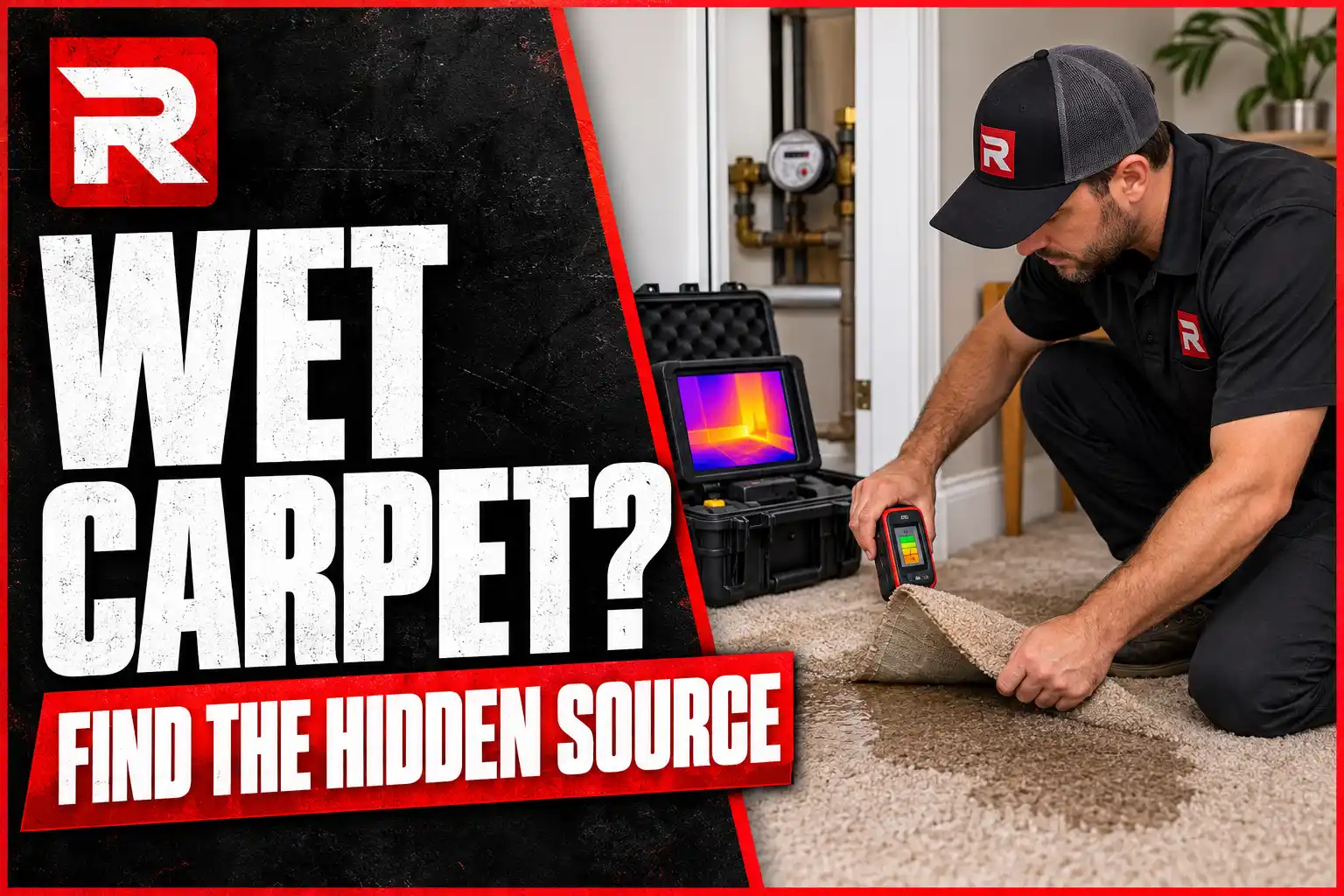
On the evening of September 1, 2021, the remnants of Hurricane Ida stalled over New Jersey and delivered one of the most destructive nights in the state’s history. In a matter of hours, six to ten inches of rain fell across northern and central New Jersey. The Raritan River reached record levels at Manville and Bound Brook. The Elizabeth River overtopped its banks in a city that had never considered itself flood-prone. Streets in Newark, Passaic, Cranford, Millburn, and dozens of other communities became rivers. Roughly thirty New Jersey residents lost their lives, many of them in cars and in ground-floor and basement apartments that filled faster than anyone could react.
Five years on, the anniversary deserves to be marked with respect for those who were lost. It also deserves something else: an honest look at what Ida taught the tri-state area about flood damage, because most of those lessons have already faded from memory — right as another peak hurricane season, with its statistical high point ten days away, arrives.
This is a guide to flood damage cleanup in New Jersey, New York, and Connecticut, built around what Ida made unmistakable.
Lesson One: The Flood That Comes From the Sky, Not the Sea
Sandy taught the region to fear the coast. Ida taught a different lesson: the most dangerous flooding in the modern tri-state area is increasingly rainfall-driven inland flash flooding — rivers and streams overwhelmed in hours, storm drains surcharging, and water pouring into neighborhoods miles from any shoreline.
That distinction matters for how flood damage happens. Surge flooding tends to be predictable in where it strikes. Flash flooding follows topography, drainage capacity, and rainfall intensity, and it strikes basements and ground floors in places with no flood history at all. It also brings the water fast, with almost no warning, which is why Ida’s losses were concentrated in below-grade and ground-floor spaces where people and possessions had minutes, not hours.
For the tri-state region, the climate trend behind Ida — more intense, more concentrated rainfall events — has not reversed. Ida-style flooding is not a once-in-a-lifetime scenario. It is the new baseline for flood risk in New Jersey.
Lesson Two: “We’re Not in a Flood Zone” Is Not a Plan
Ida’s most expensive lesson was learned by thousands of homeowners simultaneously: they had no flood insurance, because they had never been told they needed it.
Standard homeowners insurance does not cover rising water. Flood coverage is a separate policy, almost always through the National Flood Insurance Program (NFIP) or a private flood carrier. Homeowners outside FEMA’s designated high-risk zones are not required to carry it — and most don’t. But the maps describe historical risk in specific areas; they don’t describe what eight inches of rain does to a neighborhood’s drainage. FEMA itself has reported that roughly 40% of flood insurance claims come from outside high-risk zones. After Ida, the tri-state area was full of people learning that statistic personally, at the worst possible time.
The practical takeaway, five years later: if your property has a basement or ground floor and you’re anywhere near a river, stream, or low point in the drainage, flood insurance is worth pricing. Outside high-risk zones it’s often modest. And note the timing rule that matters this specific week: NFIP policies typically carry a 30-day waiting period. A policy purchased today is active by early October — still inside the season. One purchased when a storm is on the map is not.
Lesson Three: Floodwater Is Contaminated Water, Always
The second thing Ida homeowners discovered — often days into DIY cleanup — is that floodwater is not rainwater. By the time water rises through streets and drains and into a home, it has mixed with sewage from surcharged sewer systems, fuel and chemicals from roads and garages, and whatever else it crossed. The restoration industry classifies floodwater as Category 3 — grossly contaminated — by default, the same classification as sewage backups.
That classification governs the entire flood damage cleanup process:
- Exposure is a health risk. Wading, vacuuming, and scrubbing contaminated water aerosolizes bacteria and pathogens. Flood cleanup requires protective equipment, and children, elderly family members, and anyone with respiratory conditions should stay out of flooded spaces entirely.
- Porous materials that absorbed floodwater generally cannot be saved. Carpet and padding, drywall below the flood line, insulation, particle-board furniture and cabinets, mattresses, upholstered furniture, cardboard — these are removed, not cleaned.
- “Clean” means decontaminated and verified, not just dry. Surfaces are cleaned, treated with EPA-registered antimicrobials, dried to standard, and checked, in that order.
Lesson Four: The Salvage Decisions Nobody Explains
Every flooded homeowner faces the same overwhelming question standing in a wet basement: what stays, and what goes? Here is the guide our crews work from — the one we wish every Ida homeowner had received before the dumpsters arrived.
Generally salvageable (with proper cleaning and drying):
- Solid hardwood furniture (not veneer or particle board)
- Hard, non-porous items: glass, ceramics, metal, sealed plastics
- Structural framing and studs — dried and treated, not replaced
- Concrete and masonry — cleaned and treated
- Hardwood floors, sometimes — depends on species, how long submerged, and how fast drying begins; often cupped floors flatten with controlled drying
- Documents and photos — freeze them to halt deterioration until they can be professionally handled
- Washable clothing and linens — hot wash with disinfectant
Generally not salvageable after Category 3 water:
- Carpet, carpet padding, and rugs (padding is never salvageable)
- Drywall and plaster that absorbed floodwater — cut out to a line above the high-water mark (commonly the water line plus a 12–24 inch margin, since drywall wicks upward)
- Insulation of every type that got wet
- Particle board, MDF, and laminate furniture and cabinetry
- Mattresses, box springs, upholstered furniture
- Cardboard boxes and their contents if saturated
- Food, cosmetics, and medications that contacted floodwater
- Most electronics and appliances that were submerged — assessed, not assumed, but the odds are poor
Assessed by a professional, never assumed:
- Electrical outlets, panels, and wiring that were submerged — a licensed electrician decides
- HVAC systems, water heaters, and ductwork that took water
- Laminate and engineered flooring — usually a loss, occasionally not
One rule above all others: document before you discard. Every item removed is evidence for your claim. Photograph it, log it, and where a restoration crew does the removal, their material logs and moisture readings become the backbone of your file.
Lesson Five: Speed Matters Even More Than in a Clean-Water Loss
Everything we’ve written about the water damage clock applies to floods, with an extra edge. The 24-to-48-hour mold window is the same; the contamination adds a second reason to move fast, because standing floodwater keeps depositing pathogens into materials the longer it sits. Professional flood damage cleanup follows a sequence built for both risks:
- Safety and power — electrical isolated before anyone enters; structural check on anything below grade
- Contaminated water extraction — pumps and extraction with contained disposal, not into the yard or street
- Removal of unsalvageable materials — cut to the flood line plus margin, bagged, logged, documented
- Cleaning and antimicrobial treatment of everything that stays
- Structural drying — commercial dehumidification and air movement with daily moisture monitoring until framing and subfloors reach dry standard, the same structural drying discipline as any loss, applied to already-decontaminated materials
- Verification and reconstruction — drywall, flooring, insulation, and finishes rebuilt under the same project manager
Since most tri-state flood losses land in below-grade spaces, this work runs alongside our flooded basement cleanup protocols — and when a flood-affected home has also taken storm water from above, the wind-versus-water distinction we covered in our hurricane claims guide applies from day one.
Lesson Six: The NFIP Claim Is Its Own Process
Ida homeowners who did have flood insurance learned that an NFIP claim runs differently from a homeowners claim. A few things worth knowing before you need them:
- Documentation is stricter. NFIP adjusters expect itemized documentation of damaged building elements and contents, with photos, measurements, and, for contents, descriptions and approximate values. A restoration company’s material logs and photo sets are built for this.
- Proof of loss has a deadline. NFIP requires a signed proof of loss within 60 days of the loss, though FEMA has extended this window after major events, including Ida. Don’t count on an extension — know the deadline.
- Building and contents are separate coverages. Structure and personal property are covered under separate limits, and many policies carry building coverage only. Know which you have.
- Basements have specific limits. NFIP coverage for finished basement elements is significantly restricted — another reason to move irreplaceable items above grade before the season.
- Increased Cost of Compliance (ICC). After a substantial-damage determination, NFIP policies may include funds to bring a building into compliance — elevation, floodproofing, relocation — which changed the rebuilding decisions of many Ida-affected families.
Our crews prepare NFIP-compatible documentation on flood losses from the first hour on site, and coordinate directly with flood adjusters, because a claim handled correctly from day one is worth more than any argument made afterward.
Five Years Later
Ida’s anniversary is a moment to remember the people the tri-state area lost, and the thousands whose homes and neighborhoods took years to recover. It is also a reminder that the flood risk Ida revealed — rainfall-driven, inland, fast, and indifferent to old flood maps — has not gone anywhere.
The homeowners best positioned for the next Ida are doing quiet things this week: pricing flood coverage before the waiting period makes it moot, moving what matters off basement floors, testing sump pumps and battery backups, documenting their property, and saving the number they’ll need at 2 AM.
Restorian provides 24/7 flood damage cleanup across New Jersey, New York, and Connecticut — contaminated water extraction, salvage assessment, removal and decontamination, structural drying, and full reconstruction under one project manager, with NFIP-compatible documentation and direct billing to all major carriers. If your property takes water this season, call (888) 788-5038.