If your washing machine overflowed, do these five things in order: stop the cycle (press pause or power, or unplug it if the panel is unresponsive and the plug is dry and reachable), close both water supply valves behind the machine (the hot and cold handles, turned clockwise), kill power to the laundry area at the breaker if water has reached outlets or pooled under the machine, leave a front loader’s door closed until the drum has drained (it may be holding a full load of water), and then contain the spread with towels while you assess how far the water traveled, especially if the laundry is on an upper floor, where the ceiling below is now part of the problem. The supply valves matter most: in the worst failure modes, the machine can keep filling even when it is switched off, and those two handles are the only thing that stops it. Here is each cause, how to tell which one you have, and when the cleanup is bigger than towels.
First, the context that makes this post worth five minutes before you need it: insurance industry analyses consistently rank washing machine failures among the leading sources of home water damage, and the expensive versions share one feature: they run unattended. A machine that overflows mid-cycle while you are home is a mess. The same failure during a work day, or with the laundry upstairs, is a claim.
The Five Causes (and the Tell for Each)
1. The drain backed up (overflow at the standpipe or utility sink). The machine pumps out on schedule, but the drain line or standpipe cannot swallow the volume, so wash water surges back out at the wall connection. The tell: water appears during the drain portion of the cycle, behind the machine, and the machine itself is working fine. Lint, detergent scum, and in older homes a partially blocked branch line are the usual suspects. If other drains in the house gurgle at the same time, the blockage is further down and worth a plumber visit before the next load.
2. Suds lock (too much or wrong detergent). High-efficiency machines use very little water, and regular detergent, or too much of any detergent, produces foam the machine cannot handle, forcing water and suds out of the dispenser and door. The tell: mountains of foam, often with an otherwise healthy machine. The fix is the cheapest on this list: HE detergent only, and less than you think.
3. The door seal or gasket failed (front loaders). Water leaks at the front, during wash or spin, usually from a gasket that is torn, deformed, or holding a sock in its fold. The tell: leaking localized at the door, often starting small and growing over weeks.
4. The water inlet valve stuck open. This is the one worth remembering, because it breaks the mental model: the valve that lets water into the machine fails open, and the tub keeps filling even when the cycle is done, and in the worst cases even when the machine is off, because the valve is before the electronics. The tell: the machine overfills or overflows between cycles, or you find it filling when nobody started it. Only the supply valves behind the machine stop this one, which is exactly why step two of the emergency list exists.
5. A supply hose burst. The most destructive failure on the list, and it does not involve the machine running at all. The rubber hoses connecting the valves to the machine sit under full house pressure around the clock, and when an aging hose splits, it floods like a burst pipe, by the gallon per minute, until someone closes the valves. The tell: unfortunately, usually a flooded laundry room with the machine idle. The prevention is twenty dollars: braided stainless steel hoses, replaced on a five-year cycle (write the install date on the hose with a marker).
Where the Water Went (the Part Towels Can’t Reach)
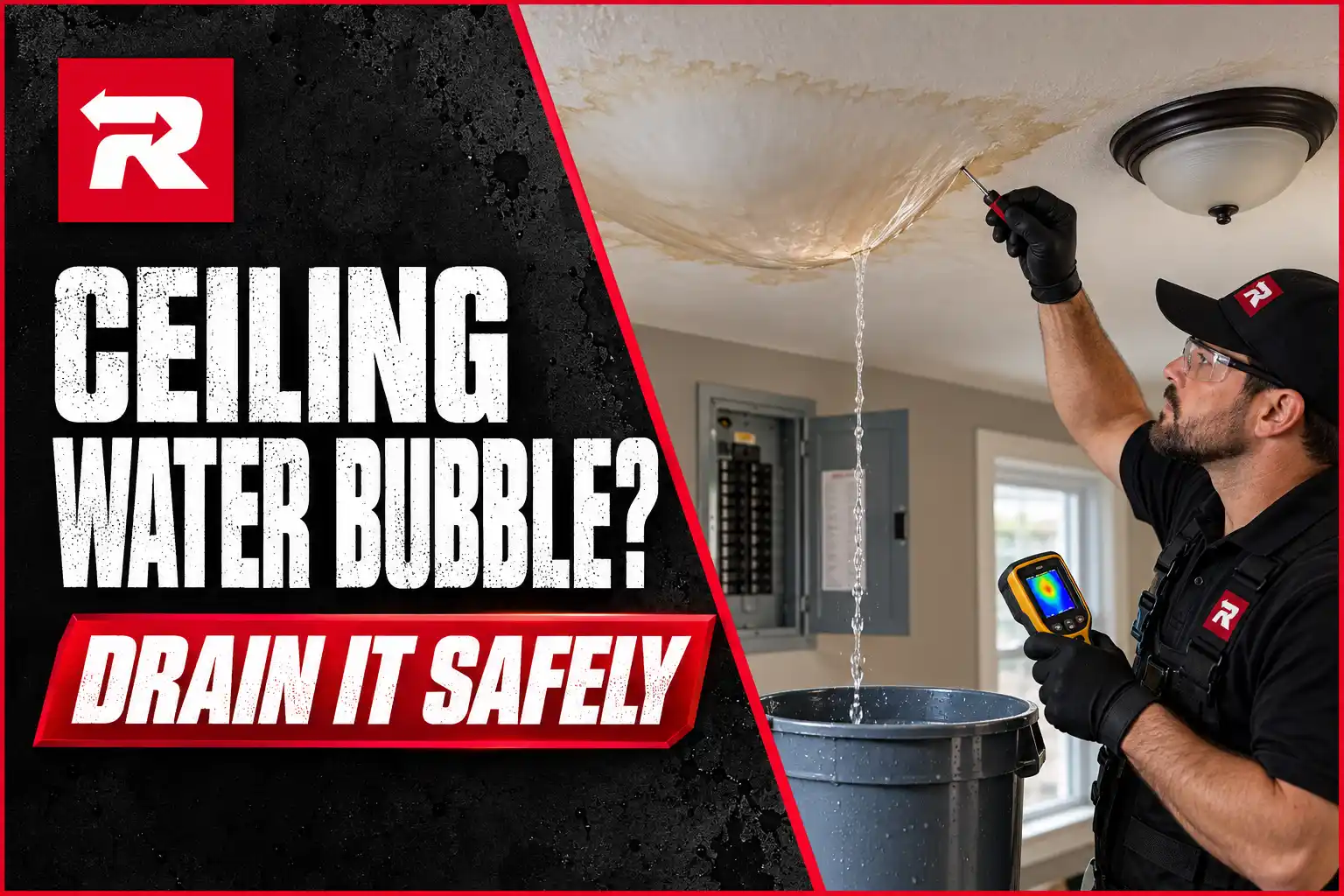
A washing machine moves a lot of water fast, and laundry rooms are built out of exactly the materials that hide it: tile or vinyl over subfloor, base cabinets, and walls on two or three sides of the machine. Water finds the gap at the baseboard and the cutout around the drain, and from there it is under the flooring and inside the wall cavities, where towels and fans cannot follow. If the laundry is on a second floor, the ceiling below is now in play, the same exit-point logic as water dripping from a ceiling vent: what shows at the ceiling is the overflow of what the cavity is holding.
One more wrinkle specific to laundry water: wash water is not clean water. The industry classifies it as Category 2, gray water carrying detergents, soils, and bacteria from the load, which means longer dwell times are worse than with a clean supply leak, and anything porous it soaked for long should be assessed rather than assumed fine. An overflow that came from a backed-up drain can be worse still, since standpipe backups can carry Category 3 contamination.
The practical rule: if the water was contained to the surface and cleaned within the hour, towels and a fan are usually a fine ending. If water ran toward walls or cabinets, stood for hours, happened upstairs, or keeps reappearing at grout lines and baseboards, that is a moisture-mapping situation, because the 24 to 48 hour mold clock runs on what is inside the floor, not what you can see. Our emergency water removal and structural drying guides cover what professional response looks like, and the numbers conversation is in our cost guide.
Prevention: The Twenty-Dollar List
- Braided stainless supply hoses, replaced every five years, dated with a marker. The single best upgrade in this post.
- Close the supply valves when traveling. The hose and inlet valve failures both die at those handles.
- Never run the machine when leaving the house or going to bed. The expensive overflows are the unattended ones.
- A water leak alarm under or behind the machine. A few dollars, and it turns a flood into a beep.
- A drain pan under upstairs machines, plumbed to a drain where possible. Upstairs laundry without a pan is a ceiling claim on a timer.
- HE detergent, modest doses, and an occasional gasket wipe for front loaders.
While you are in the utility space with a flashlight anyway, glance at the neighbor appliance too: the water heater fails in the same season and the same corner.
The Insurance Note
The pattern regular readers know: sudden and accidental water damage from an appliance failure, a burst hose, a stuck valve, an overflow, is typically covered by homeowners insurance, minus the deductible, while the machine itself usually is not, and damage from a slow leak that visibly ran for weeks can be contested as maintenance. Photograph the scene before cleanup, keep the failed part (a split hose is the easiest cause-of-loss evidence there is), and if the damage went past the surface, get the moisture documented early. We prepare Xactimate certified estimates and bill carriers directly, and the full process lives on our water damage restoration page.
The Bottom Line
The emergency is five moves: cycle off, both valves closed, power cut if water reached electrical, front loader door closed, then contain and assess. The causes are five suspects with clean tells, from suds to the stuck-open inlet valve that can flood a house with the machine off. And the prevention is the cheapest in home ownership: braided hoses on a dated five-year cycle, valves closed for trips, no unattended loads, and a leak alarm standing guard for the price of a pizza.
Restorian provides 24/7 water damage response across New Jersey, New York, and Connecticut: extraction, moisture mapping, structural drying, mold prevention, and repairs under one project manager, with free assessment and direct insurance billing. Laundry room flooded, or a ceiling below it staining? Call (888) 788-5038.
Frequently Asked Questions
What should I do first when a washing machine overflows? In order: stop the cycle, close both supply valves behind the machine (hot and cold, clockwise), cut power to the area at the breaker if water reached outlets or pooled under the machine, keep a front loader’s door closed until the drum drains, then contain the water and assess how far it spread. The valves are the critical step, because some failures keep filling the machine even when it is off.
Why is my washing machine overflowing even when it’s turned off? That is the signature of a water inlet valve stuck open. The valve sits before the machine’s electronics, so switching the machine off does not close it, and the tub keeps filling until the supply valves behind the machine are closed. It is a repairable part, but until the repair, leave those valves shut between loads.
Is washing machine water considered dirty or gray water? Yes, wash water is Category 2 gray water, carrying detergents, soils, and bacteria from the load, which makes long dwell times worse than a clean supply leak. An overflow caused by a backed-up drain or standpipe can be worse still, since sewer backups carry Category 3 contamination. Either way, porous materials that stayed soaked should be assessed, not assumed fine.
Will my floor be ruined under the washing machine? It depends on speed and spread. Surface water cleaned within the hour on tile or vinyl usually ends well. Water that ran to walls, under cabinets, or sat for hours gets beneath the flooring into subfloor and wall cavities, where it feeds mold within 24 to 48 hours, and laminate and engineered floors that absorbed water often swell. Reappearing dampness at grout lines or baseboards means the water is below, and a moisture check beats guessing.
Does homeowners insurance cover washing machine water damage? Usually yes for the resulting damage when the failure was sudden and accidental (burst hose, stuck valve, overflow), minus your deductible, while the machine itself is typically not covered. Slow leaks that visibly ran for weeks can be contested as maintenance. Photograph everything before cleanup and keep the failed part, especially a split hose, as cause-of-loss evidence.
How do I stop my washing machine from ever flooding the house? Four cheap habits: braided stainless supply hoses replaced on a five-year cycle (write the date on them), supply valves closed when traveling, no loads running while you sleep or leave the house, and a water leak alarm behind the machine. Upstairs laundry rooms should add a drain pan. Together they eliminate nearly every expensive version of this loss.