
Mold does not always announce itself. It grows behind walls, under flooring, inside HVAC systems, and in crawl spaces where you would never think to look. By the time you see it or smell it, it has usually been spreading for weeks. Restorian provides certified mold inspection, containment, removal, and prevention for residential and commercial properties across New Jersey, eliminating mold at the source and making sure it does not come back.
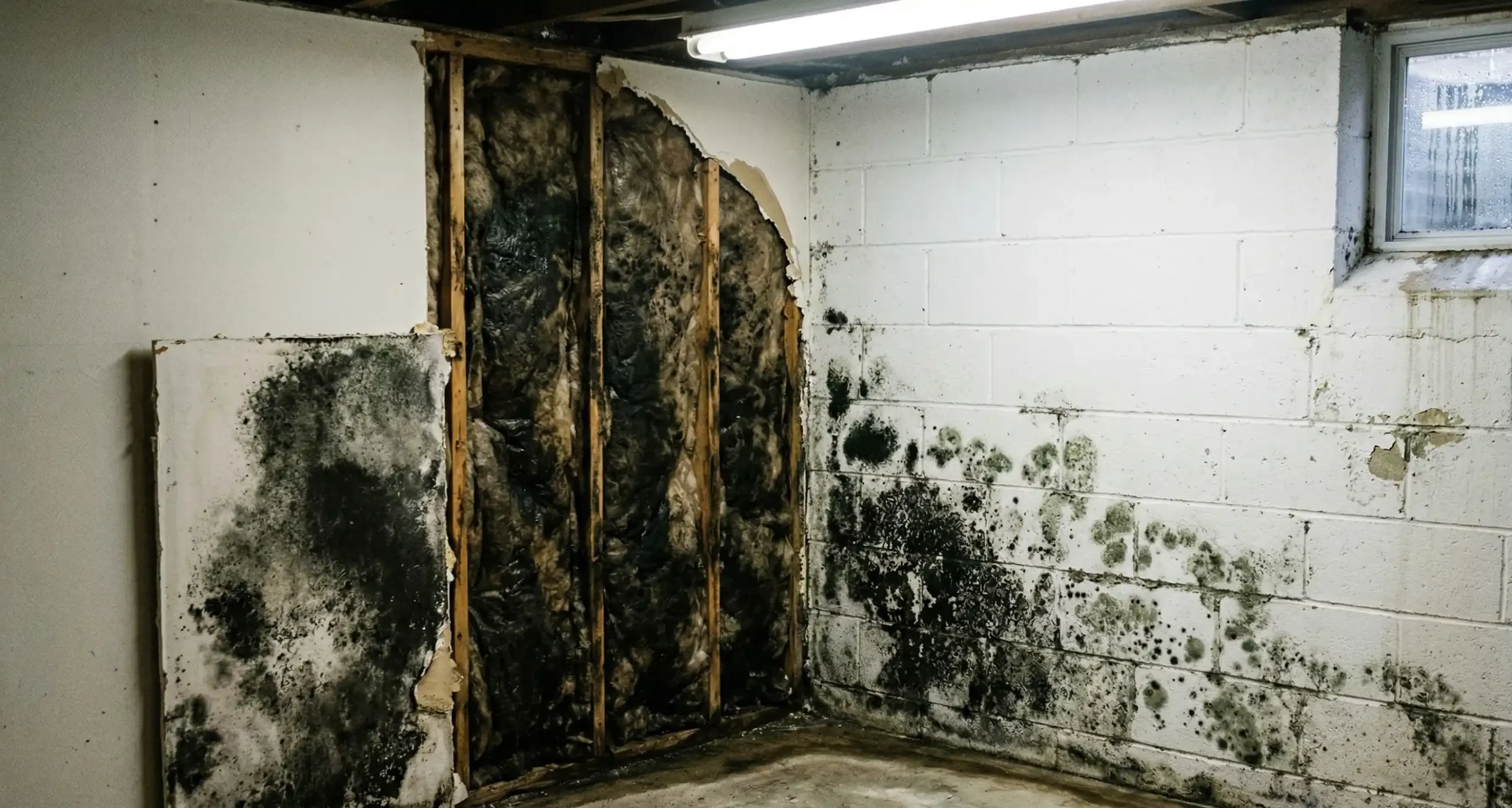
A lot of people see mold and think it is just an ugly stain they can scrub off. But mold is a living organism that feeds on the organic materials your property is built with. Drywall, wood framing, insulation, carpet, ceiling tiles, and wallpaper are all food sources for active mold colonies. Left untreated, mold breaks down these materials structurally over time and eventually destroys them beyond repair.
The health side is just as serious. Mold releases spores into the air that circulate through your property every time your HVAC system runs or air moves through the space. For people with allergies, asthma, or compromised immune systems, prolonged mold exposure can trigger respiratory issues, persistent coughing, headaches, skin irritation, and worsening chronic conditions. Black mold, specifically Stachybotrys chartarum, produces mycotoxins that pose elevated health risks with extended exposure. Every type of indoor mold should be taken seriously and removed by certified professionals.
Mold and water damage are directly connected. Every water event that is not professionally dried creates the conditions mold needs to grow. All mold requires is moisture, an organic food source, and a temperature range between roughly 40 and 100 degrees Fahrenheit. The inside of a wet wall cavity, a saturated subfloor, or a damp crawl space provides all three year round in New Jersey properties.
Mold can begin developing within 24 to 48 hours after a water event. A slow leak behind a bathroom wall that never produced a visible puddle can create a mold colony that has been growing for months by the time you smell it. A basement that flooded six months ago and was dried with household fans may look fine on the surface but have active mold growth behind the drywall where trapped moisture was never properly extracted. This is why professional water damage restoration with verified structural drying is the most effective form of mold prevention.
The first step in any mold project is understanding how far the problem has spread. What is visible on a wall or ceiling is almost never the full picture. Mold colonies typically start behind the surface where moisture is trapped, inside wall cavities, beneath flooring, above ceiling tiles, and around plumbing penetrations. By the time growth becomes visible on the outside, the colony behind it is usually much larger.
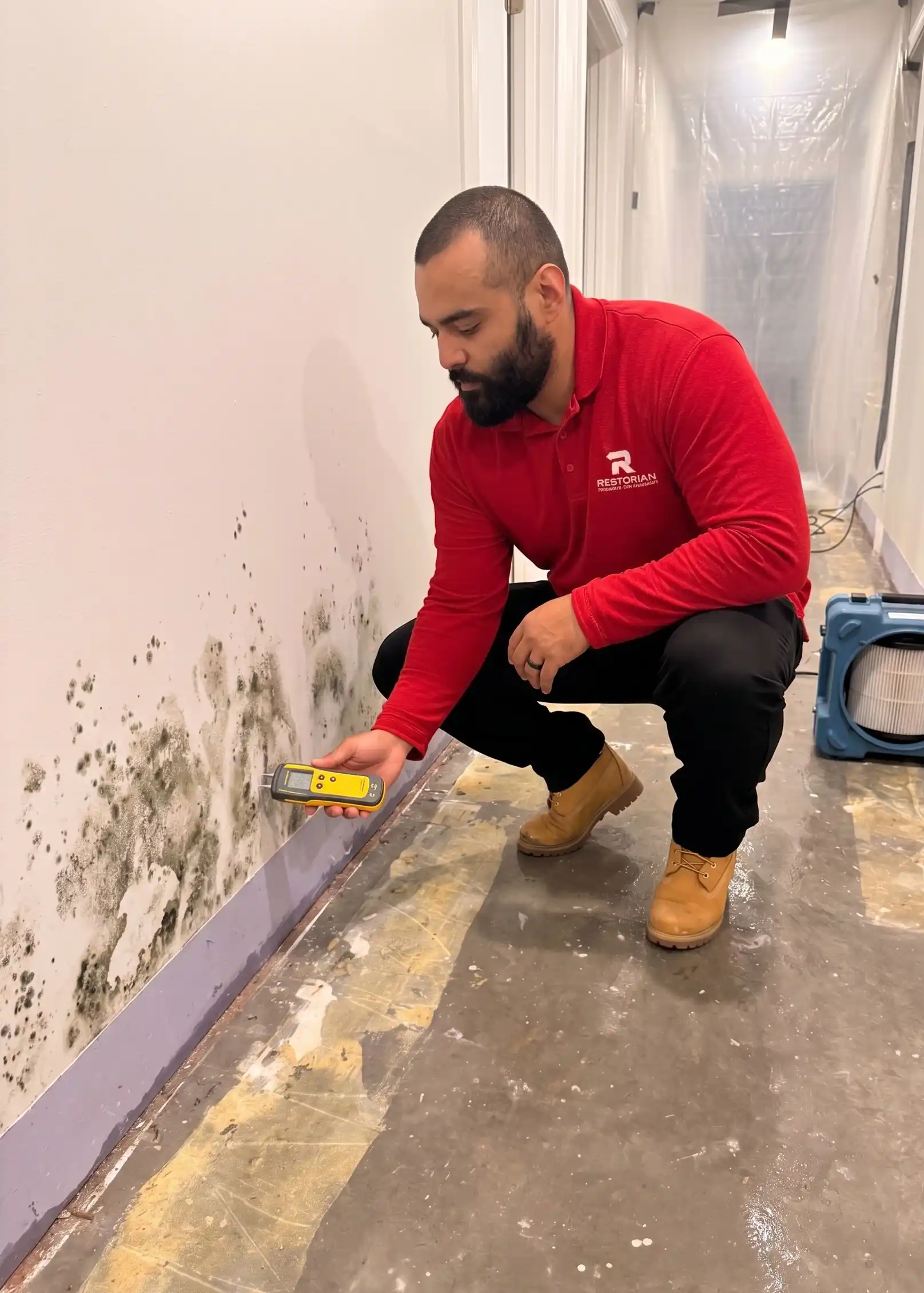
Our inspection process starts with a thorough visual assessment of every area in the property where mold is likely to develop. From there, we use professional moisture meters and thermal imaging cameras to identify hidden moisture pockets that are fueling growth in areas you cannot see. When needed, we conduct air quality testing to measure spore levels and determine exactly what type of mold is present. You receive a detailed report with our findings, affected areas mapped out, and a clear remediation plan before any work begins.
Air quality testing provides critical data that guides the entire remediation approach. We collect air samples from inside the property and compare them to outdoor baseline samples to determine whether indoor spore concentrations are elevated. The lab analysis identifies the specific mold species present, which matters because different species require different treatment protocols and carry different health risk profiles. Stachybotrys, Aspergillus, Penicillium, and Cladosporium are among the most common species we encounter in New Jersey properties. This data also serves as the pre remediation baseline that we compare against during post remediation verification to confirm the work was successful.
Mold remediation is not as simple as tearing out drywall and spraying bleach. Improper removal actually makes the problem worse by releasing millions of spores into the air that settle on new surfaces and start fresh colonies throughout the property. That is why containment is the most critical first step.
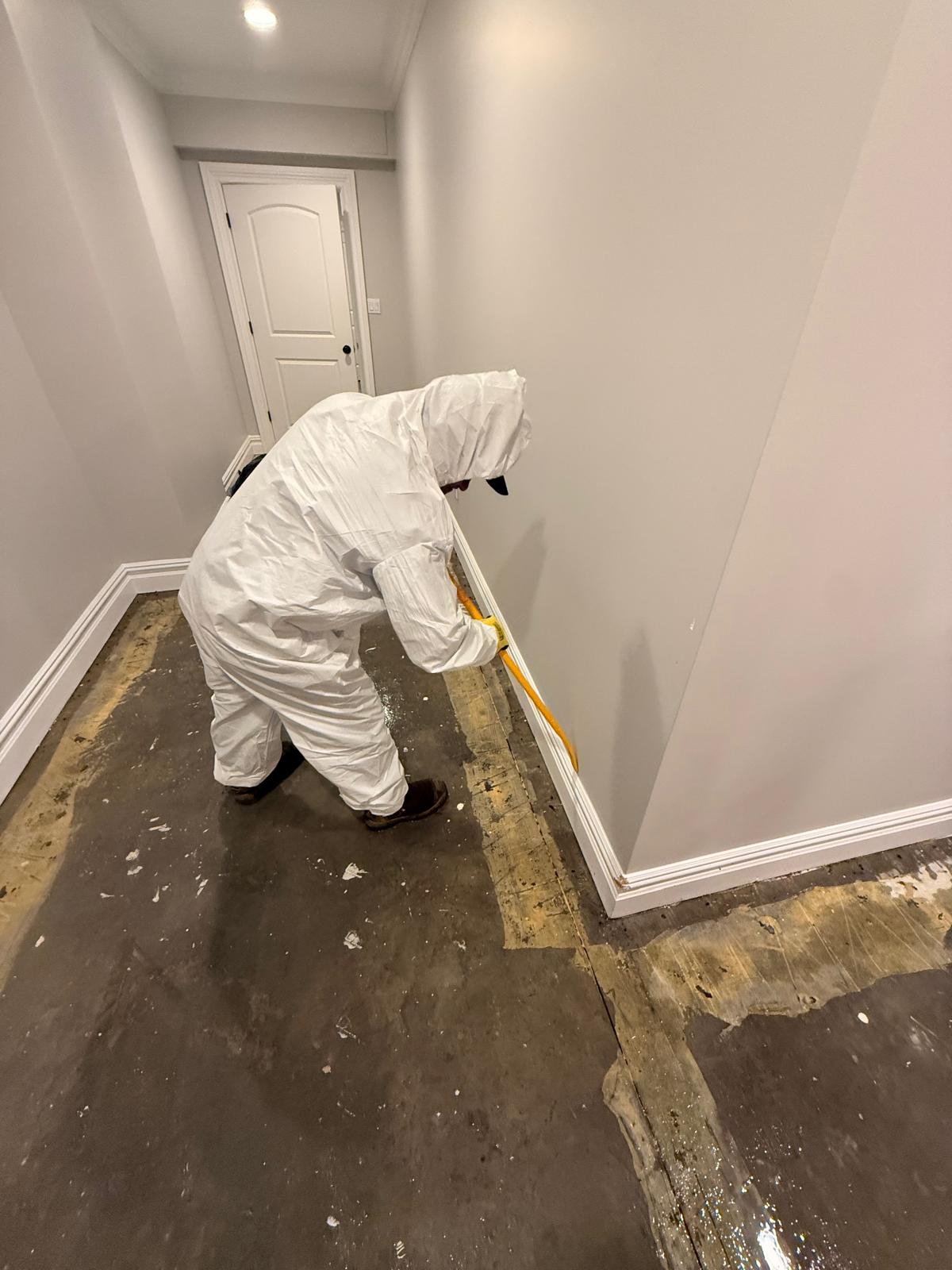
We seal off the affected area using heavy plastic sheeting and establish negative air pressure to prevent spores from escaping into the rest of the property. HEPA air scrubbers run continuously throughout the process, filtering airborne spores down to 0.3 microns to keep the surrounding air clean and safe.
Once containment is established, our IICRC certified technicians remove all mold affected materials. Drywall, insulation, carpet, wood, ceiling tiles, whatever the mold has compromised beyond surface level contamination. Every removed material is bagged, sealed, and disposed of properly. After removal, we treat all remaining surfaces with professional grade antimicrobial solutions that kill residual mold and inhibit future growth. Framing, studs, subfloors, and any structural elements that remain are cleaned, treated, and dried to verified safe moisture levels.
The drying phase follows removal. Commercial dehumidifiers and air movers bring all affected areas down to their target dry standard. We take daily moisture readings and adjust equipment placement as conditions change. We do not consider the drying phase complete until every reading confirms the environment can no longer support mold growth. If the original moisture source was a leak, condensation issue, or drainage problem, we identify it during our inspection and either address it directly or advise you on the repair needed to prevent recurrence.
These three areas are the most common locations for hidden mold growth in New Jersey properties and the most commonly overlooked during general property maintenance.
Attics develop mold from poor ventilation, bathroom exhaust fans that vent into the attic instead of outside, and minor roof leaks that go unnoticed for months or years. You might not go into your attic regularly, and during that time a small leak or condensation issue can create a massive mold colony on the underside of the roof sheathing.
Basements are vulnerable to groundwater seepage, high humidity, foundation cracks, and condensation on cold pipes and walls. Finished basements are particularly problematic because the drywall and insulation create perfect food sources for mold in an environment that is already moisture prone. Bergen County and Hudson County properties with older foundations and limited waterproofing are especially susceptible.
Crawl spaces sit directly against the ground and are constantly exposed to soil moisture. Without proper vapor barriers and ventilation, crawl spaces can sustain mold growth year round. Because most homeowners never access their crawl spaces, mold can spread unchecked for months or even years before being discovered.
Each of these spaces requires a tailored remediation approach. Access is often limited, ventilation is poor, and the conditions that caused the mold need to be corrected alongside the remediation. We remove mold from all three environments, treat structural surfaces, dry completely, and recommend or perform preventive measures like encapsulation, vapor barriers, and improved ventilation to keep mold from returning.
Mold coverage varies widely between insurance policies. Many policies cover mold if it resulted from a covered water damage event like a burst pipe, storm damage, or appliance failure. Some policies have mold coverage caps that limit the total amount the carrier will pay for remediation. Others exclude mold coverage entirely or offer it only as an optional rider.
Understanding what your policy covers before work begins is important, and we help you navigate that. Restorian documents every mold project thoroughly from the first inspection through post remediation verification. Inspection findings, moisture data, photos, air quality test results, remediation scope, treatment methods, and clearance results are all compiled into a comprehensive file that supports your claim.
We work with all major insurance carriers including NJM Insurance Group, State Farm, USAA, Allstate, AIG, Progressive, American Family Insurance, Nationwide, Liberty Mutual, and Farmers Insurance. If your claim qualifies for coverage, we prepare Xactimate certified estimates, coordinate with your adjuster, and handle direct billing. If mold coverage is limited under your policy, we walk you through your options honestly and work with you on a plan that fits your situation. No surprises, no hidden costs, just a clear path from discovery to resolution.
It depends on the severity and location of the mold. For small, contained remediation projects in a single room or area that can be fully sealed off from the rest of the living space, occupants can often remain in the home while work is performed. For larger projects involving multiple rooms, HVAC contamination, or mold species that produce mycotoxins such as Stachybotrys, we typically recommend temporary relocation during the active remediation phase to avoid exposure to elevated spore levels. Our IICRC certified technicians establish full containment with negative air pressure and HEPA filtration on every project regardless of size, but the safest approach for projects involving significant square footage or toxic mold species is to stay elsewhere until post remediation air quality testing confirms spore levels have returned to safe baseline levels.
Mold returns because DIY cleaning methods address the surface growth but not the underlying cause. Bleach and household cleaners may kill visible mold on non porous surfaces like tile, but they do not penetrate into porous materials like drywall, wood, and grout where mold roots grow. The surface looks clean, but the organism is still alive underneath and regrows within days or weeks. More importantly, cleaning the mold without fixing the moisture source that caused it guarantees recurrence. Professional mold remediation addresses all three factors: the visible mold is removed, all contaminated porous materials are extracted and replaced, antimicrobial treatments are applied to prevent regrowth, and the moisture source is identified and corrected. Without addressing all three, any mold removal effort is temporary.
Hidden mold is extremely common and often the most damaging because it grows unchecked for extended periods. The most reliable early indicator is a persistent musty or earthy smell that does not go away with normal cleaning and ventilation, particularly in basements, bathrooms, closets, and near exterior walls. Recurring allergy symptoms that worsen when you are home and improve when you leave are another strong indicator. Water stains, past leaks, or areas that previously experienced flooding are high risk zones even if they appear dry now. Unexplained increases in humidity levels inside the property can also signal hidden moisture feeding concealed mold growth. If you suspect hidden mold, Restorian provides professional mold inspections using moisture meters, thermal imaging, and air quality testing to detect and locate mold growth that is not visible to the naked eye.
Mold testing involves air sampling, surface sampling, and sometimes bulk material sampling to identify the specific types of mold present and measure concentration levels. Air samples are collected from inside the property and compared to outdoor baseline samples to determine whether indoor mold levels are elevated. Surface samples involve swabbing visible mold growth to identify species. Lab analysis typically takes two to five business days. Testing is not always necessary for visible mold cases where the scope is clearly defined, but it becomes important when mold is suspected but not visible, when occupants are experiencing unexplained health symptoms, when real estate transactions require documentation, or when post remediation verification is needed to confirm the work was successful. Restorian provides professional mold inspection and testing services alongside our remediation work.
No. Painting over mold, even with mold resistant or antimicrobial paint, does not solve the problem and the mold will return within weeks or months. Mold is a living organism with roots that grow into porous materials like drywall, wood, and grout. Paint only covers the surface while the mold underneath continues to grow and spread beneath the paint film. As the mold grows, it pushes the paint away from the surface, causing bubbling, peeling, and eventually visible regrowth. Additionally, the moisture source that caused the mold in the first place is still present, meaning any mold treatment without addressing the underlying moisture is temporary at best. Proper mold remediation requires removing all affected porous materials, treating remaining surfaces with professional antimicrobial solutions, and correcting the moisture source before any repainting can be done.
Fill out the form and our team will reach out immediately.
We act fast so your property—and peace of mind—can be restored without delay. With state-of-the-art drying equipment and expert technicians, Restorian is your trusted partner in water damage recovery.

With years of hands-on restoration experience, we’ve handled everything from flooded basements to full-scale commercial water disasters.
Thousands of restoration projects completed across New Jersey.
IICRC-certified technicians with proven results.
Moisture detection tools ensure no damage is left behind.
Water emergencies don’t wait—we’re always on call.