
24/7 emergency response to pipe bursts and frozen pipe failures across New Jersey, New York, and Connecticut. Industrial water removal, structural drying, and full restoration with IICRC certified crews.
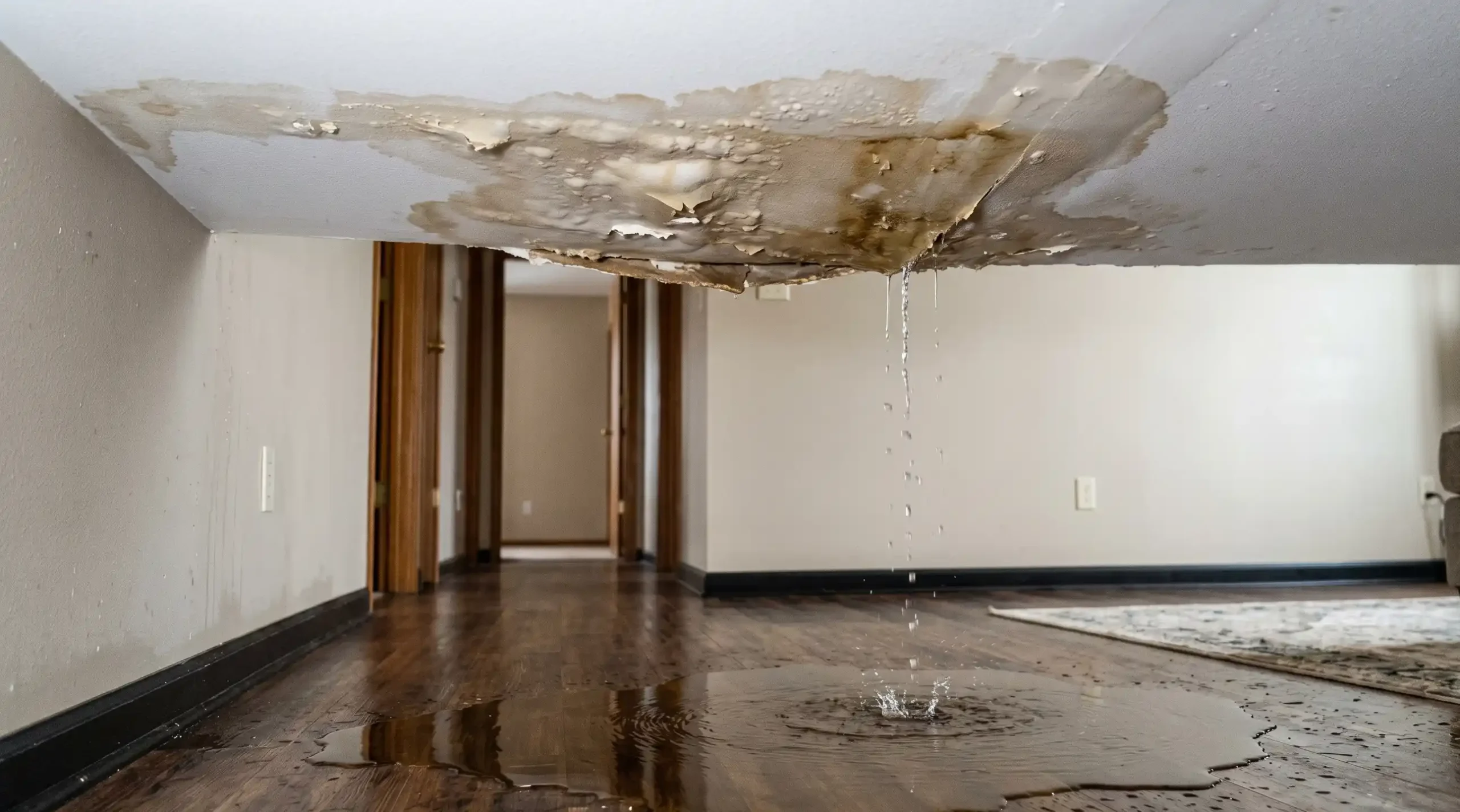
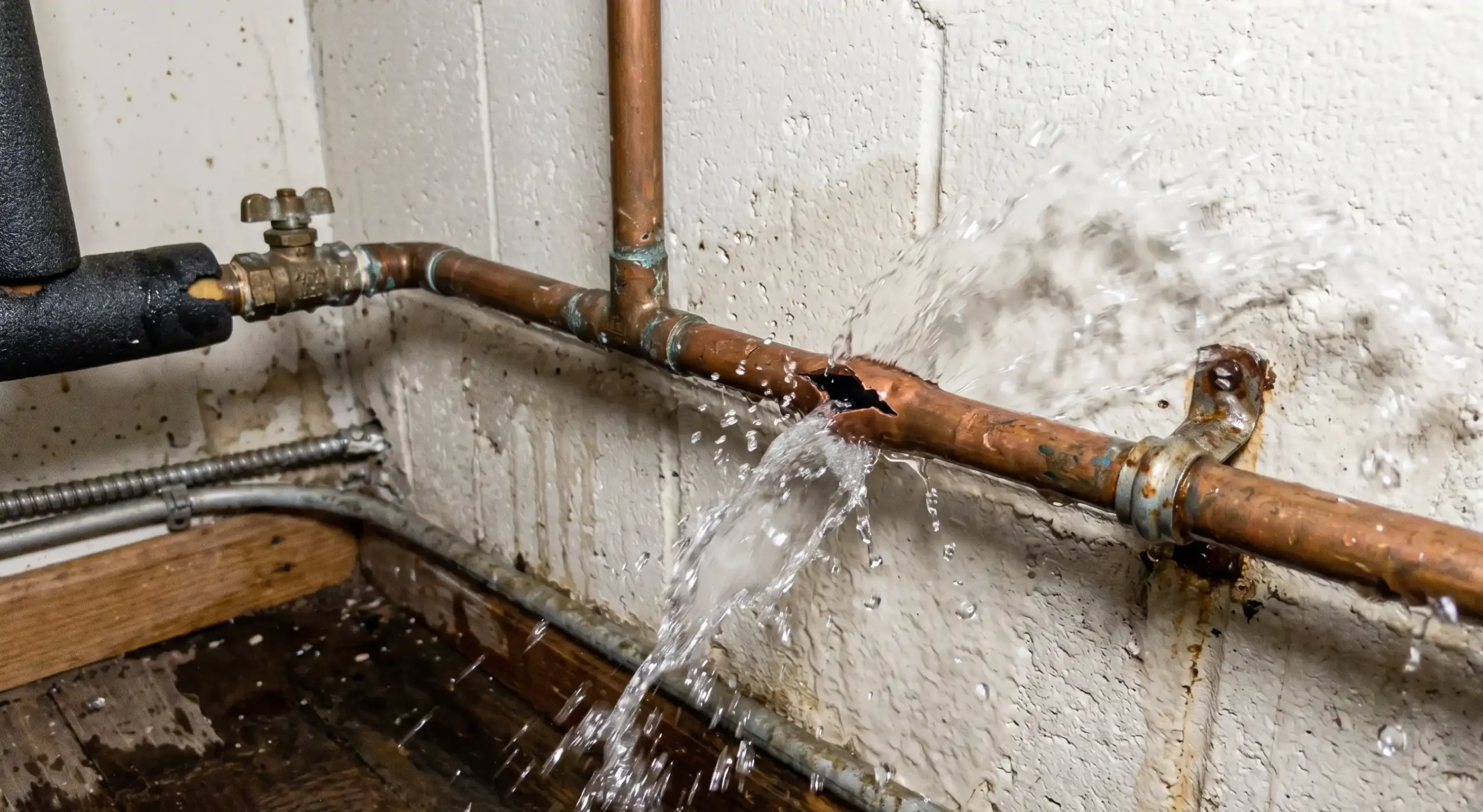
A burst pipe is one of the most disruptive water events a homeowner or business owner can face. A single ruptured supply line can release hundreds of gallons of water before it is shut off, damaging walls, ceilings, flooring, and contents across multiple rooms or entire floors. Restorian provides 24/7 emergency pipe burst cleanup across the entire tri-state area, with IICRC certified crews trained to stop the spread of water, dry the structure, and document every detail for your insurance carrier.
Pipes rupture for several different reasons, and understanding the cause helps both with the immediate response and with preventing future events. The most common causes of pipe bursts include:
Frozen pipe events spike during winter cold snaps. Aging plumbing failures spread across all seasons. Both create the same downstream water damage, even if the cause is different.
When Restorian arrives at a pipe burst, the work proceeds through a defined sequence designed to stop further damage and document everything for your insurance carrier.
Step one: source confirmation and safety. Our crews confirm the water has been shut off and verify there is no electrical hazard before entering the affected area. If the homeowner has not been able to shut off the water, we shut off the main supply ourselves. Photos and video are captured before any work begins.
Step two: emergency water removal. Standing water is extracted with industrial pumps and extraction units. Depending on the volume of water and the area affected, this phase can range from a few hours for a contained event to a full day for a major rupture that flooded multiple floors.
Step three: damage assessment and material removal. Once water has been removed, our crews assess affected materials with moisture meters and thermal imaging. Materials that cannot be saved are removed, including saturated drywall, insulation, baseboards, and any contaminated finishes. This step is critical because hidden moisture inside walls is what causes the mold and structural issues that develop weeks after the original event.
Step four: structural drying. The remaining materials, including framing, subfloor, and salvageable drywall, are dried using industrial dehumidifiers and air movers. Daily moisture readings verify the structure is reaching the dry standard. Most pipe burst drying jobs run three to seven days.
Step five: reconstruction. Damaged drywall, flooring, framing, cabinetry, and finishes are replaced. Because Restorian handles every phase under one project manager, the rebuild begins immediately after drying is complete with no delay or scope confusion between separate contractors.
Frozen pipe bursts are different from other pipe failures because they have a specific cause, a specific season, and a specific set of preventive measures that can reduce the risk in future winters.
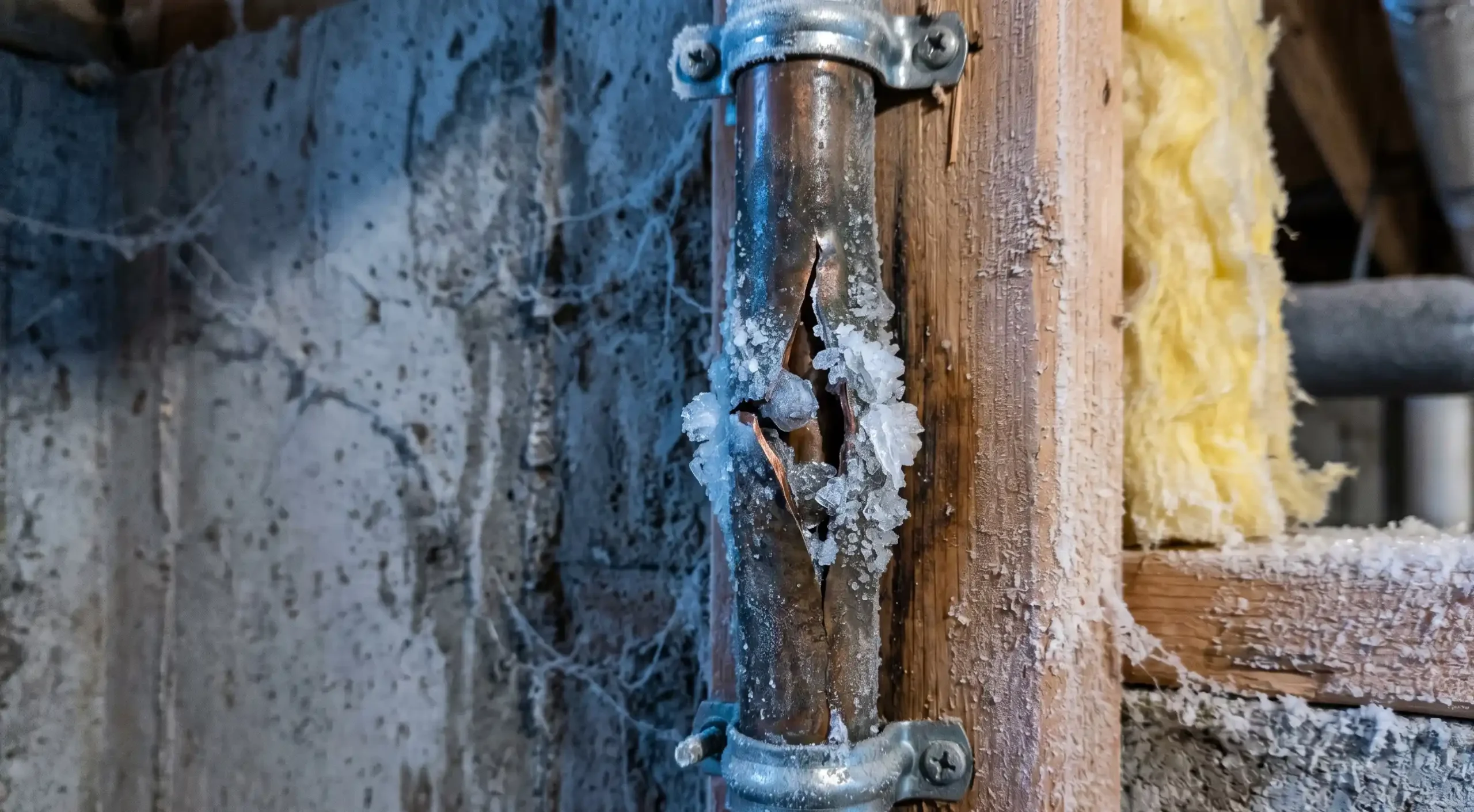
When water inside a pipe freezes, it expands by approximately 9 percent in volume. That expansion creates pressure that can rupture even copper and PEX pipes if the freeze is severe enough or sustained long enough. Most frozen pipe bursts happen during the first 24 to 48 hours after a major cold snap, especially when the cold snap follows an unseasonably warm period that left homeowners unprepared.
The pipes most likely to freeze are those in unheated or poorly insulated areas. Common failure points include exterior walls in older homes without modern insulation, attic supply lines that feed second-floor bathrooms, garage plumbing, basement supply lines near unheated foundation walls, and outdoor faucet supply lines where the shutoff was not properly winterized.
Restorian responds to dozens of frozen pipe bursts every winter across our tri-state service area, particularly during the January and February cold snaps that affect northern New Jersey and southern New York. Most of these events affect homes that experienced one or more of the following: extended absence from the property during cold weather, thermostat set too low to maintain interior temperatures, exterior wall plumbing that was never properly insulated, or outdoor faucet supply lines that were not shut off and drained before winter.
Speed matters more for pipe burst events than almost any other water damage scenario, because a pipe burst can release water continuously until it is shut off and that water spreads through the structure within minutes.
Within the first hour, water has typically saturated drywall, baseboards, and the lower sections of structural framing in the immediate area. If water spread across multiple rooms or down to lower floors before the supply was shut off, the affected area can be substantial. Within 24 hours, mold spores begin germinating on every wet porous surface. Within 48 to 72 hours, visible mold colonies form behind drywall and on framing.
Restorian responds to pipe burst calls 24 hours a day, 7 days a week. Most addresses across our core service area in northern New Jersey see crews on site within 90 minutes to 2 hours of the call. The crew that arrives is the crew that handles the job from extraction through drying through reconstruction. There are no handoffs, no waiting for a different company to do the next phase, and no gaps in the timeline that allow more damage to develop.
Most standard homeowner insurance policies cover sudden and accidental pipe burst events as part of standard water damage coverage. This includes both the cleanup of the damage and the cost of accessing the failed pipe to repair it. The plumbing repair itself (the cost of fixing the broken pipe) is typically NOT covered, but everything else including water damage cleanup, drying, and reconstruction usually is.
Coverage can be more complicated in specific scenarios. Frozen pipe bursts in unoccupied properties may have reduced coverage if the policy requires the property to be heated to a minimum temperature during winter. Burst water main events that flood the property from outside may fall under flood insurance rather than homeowner insurance. Aging plumbing failures that the homeowner knew about but did not address may be denied as gradual rather than sudden damage.
Restorian prepares Xactimate certified estimates and detailed documentation for every pipe burst job, formatted in the way insurance adjusters use to evaluate claims. We work directly with all major insurance carriers including NJM Insurance Group, State Farm, USAA, Allstate, AIG, Progressive, American Family Insurance, Nationwide, Liberty Mutual, and Farmers Insurance. Our documentation often determines whether marginal claims are approved or denied because we capture details that homeowners and DIY responders typically miss.
Shut off the water supply immediately. The main shutoff valve is typically located near the water meter, in the basement, or where the main supply line enters the home. If you cannot find or operate the main shutoff, call your water utility for emergency assistance. After the water is off, turn off electricity to the affected area at the breaker if water has reached outlets, appliances, or wiring. Photograph everything before you move or remove anything. Move valuable items to a dry area if you can do so safely. Then call a professional pipe burst cleanup company. The longer water sits in the structure, the more expensive the cleanup becomes.
Several measures significantly reduce the risk of frozen pipe failures. Insulate exposed pipes in unheated areas including basements, attics, garages, and crawl spaces. Allow faucets on exterior walls to drip during severe cold snaps to keep water moving in the supply lines. Maintain interior temperatures of at least 55 degrees Fahrenheit even when the property is unoccupied, especially during winter trips. Drain and shut off outdoor faucets and irrigation lines before winter. If you discover any of these measures have been missed and a cold snap is imminent, take action that day. Frozen pipe failures most commonly occur in homes that were unprepared for the specific cold event.
Timelines vary based on the volume of water released, how long it ran before being shut off, the materials affected, and whether reconstruction is needed. A small contained pipe burst caught quickly can sometimes be addressed in 5 to 7 days from extraction through drying. A major rupture that flooded multiple rooms or floors typically runs 2 to 4 weeks including reconstruction. We provide a clear timeline estimate after the initial assessment so you know what to expect.
It depends on what got wet and how long it sat. Hard non-porous items like ceramics, sealed plastics, and metals can usually be cleaned and saved. Porous items including upholstery, mattresses, soft toys, fabric clothing, and unsealed wood may need extended professional drying or replacement. Important documents, photographs, and irreplaceable items can sometimes be sent for specialty restoration if addressed quickly. We document every affected item separately for the insurance claim and provide guidance on what can be saved versus replaced.
Typically not. Most homeowner insurance policies cover the water damage caused by a burst pipe but exclude the cost of repairing the pipe itself. The reasoning is that the pipe failure is considered a maintenance issue rather than a covered loss. However, the cost of accessing the pipe (cutting drywall, removing finishes) is usually covered as part of the water damage claim. Restorian coordinates with your plumber for the actual pipe repair so the entire project moves forward without delay between the cleanup work and the plumbing fix.
Fill out the form and our team will reach out immediately.
We act fast so your property—and peace of mind—can be restored without delay. With state-of-the-art drying equipment and expert technicians, Restorian is your trusted partner in water damage recovery.

With years of hands-on restoration experience, we’ve handled everything from flooded basements to full-scale commercial water disasters.
Thousands of restoration projects completed across New Jersey.
IICRC-certified technicians with proven results.
Moisture detection tools ensure no damage is left behind.
Water emergencies don’t wait—we’re always on call.