
24/7 emergency flooded basement cleanup across New Jersey, New York, and Connecticut. Industrial water extraction, structural drying, and sanitization with IICRC certified crews and direct insurance billing.
A flooded basement is one of the most common and most damaging events that homeowners face. Water that pools in a basement does not stop at the floor. It soaks into drywall, insulation, framing, flooring, and personal belongings, and it does so faster than most homeowners realize. Restorian provides 24/7 emergency flooded basement cleanup across the entire tri-state area with rapid extraction, professional drying, and full sanitization to get your basement back to dry, safe, and usable condition as quickly as possible.
Basements flood for several different reasons, and the cause matters because it determines the cleanup approach, the contamination level, and how the loss is documented for insurance. The most common causes we respond to include:
Each cause produces a different category of water (clean, gray, or black), and each category requires different cleanup protocols. Sewage and storm flooding are typically classified as Category 3 black water, which requires more aggressive sanitization and more material removal than a clean water event from a burst supply pipe.
When Restorian arrives at a flooded basement job, the work proceeds through a defined sequence designed to stop further damage and document everything for your insurance carrier.
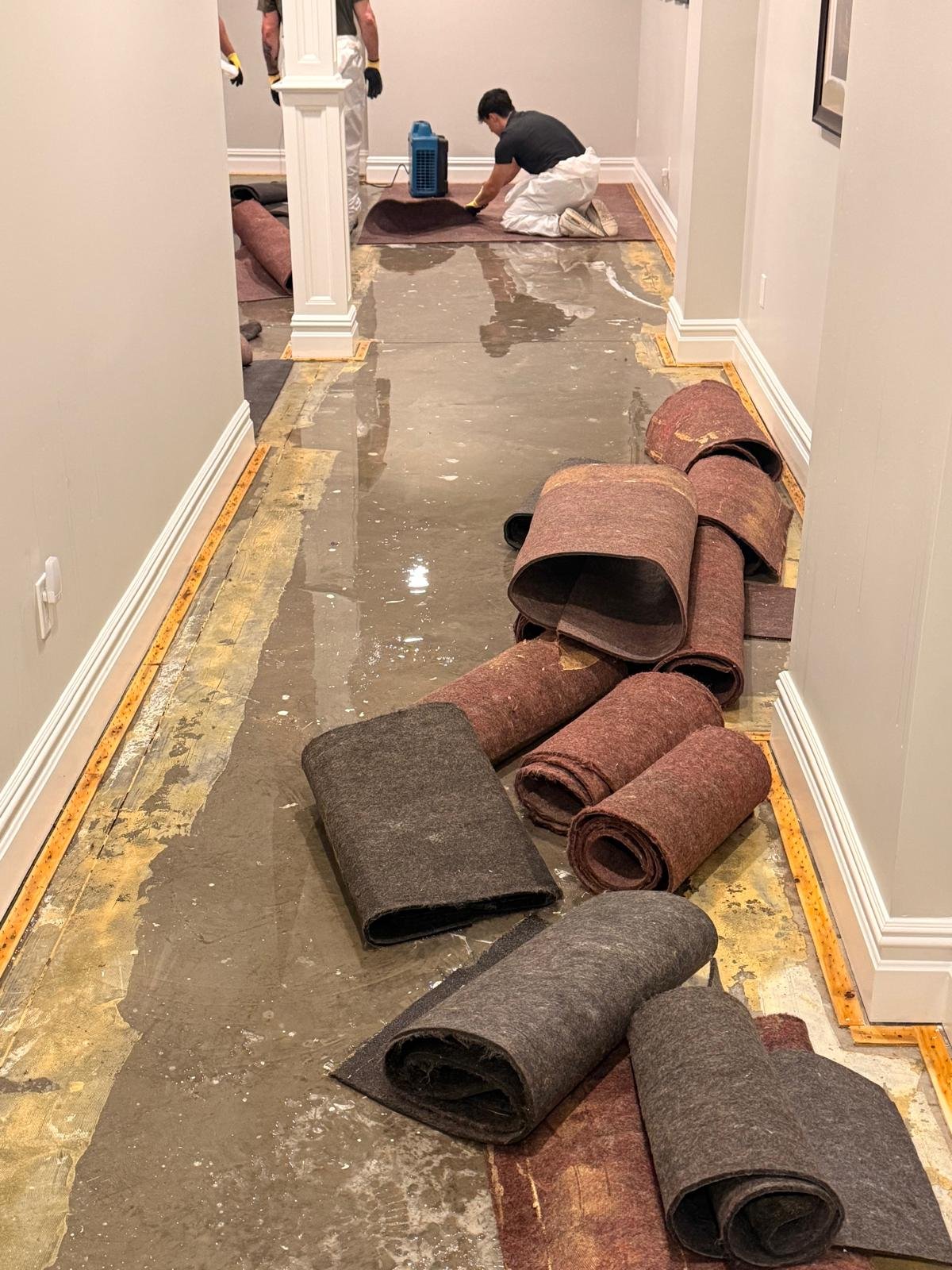
Step one: assessment and water extraction. Our crews arrive with industrial pumps and truck-mounted extraction units capable of removing thousands of gallons of standing water. Before pumping begins, we identify the source of the water if possible, document the affected area with photos, and determine whether the water is clean, gray, or contaminated. This emergency water removal phase is often completed within the first few hours on site.
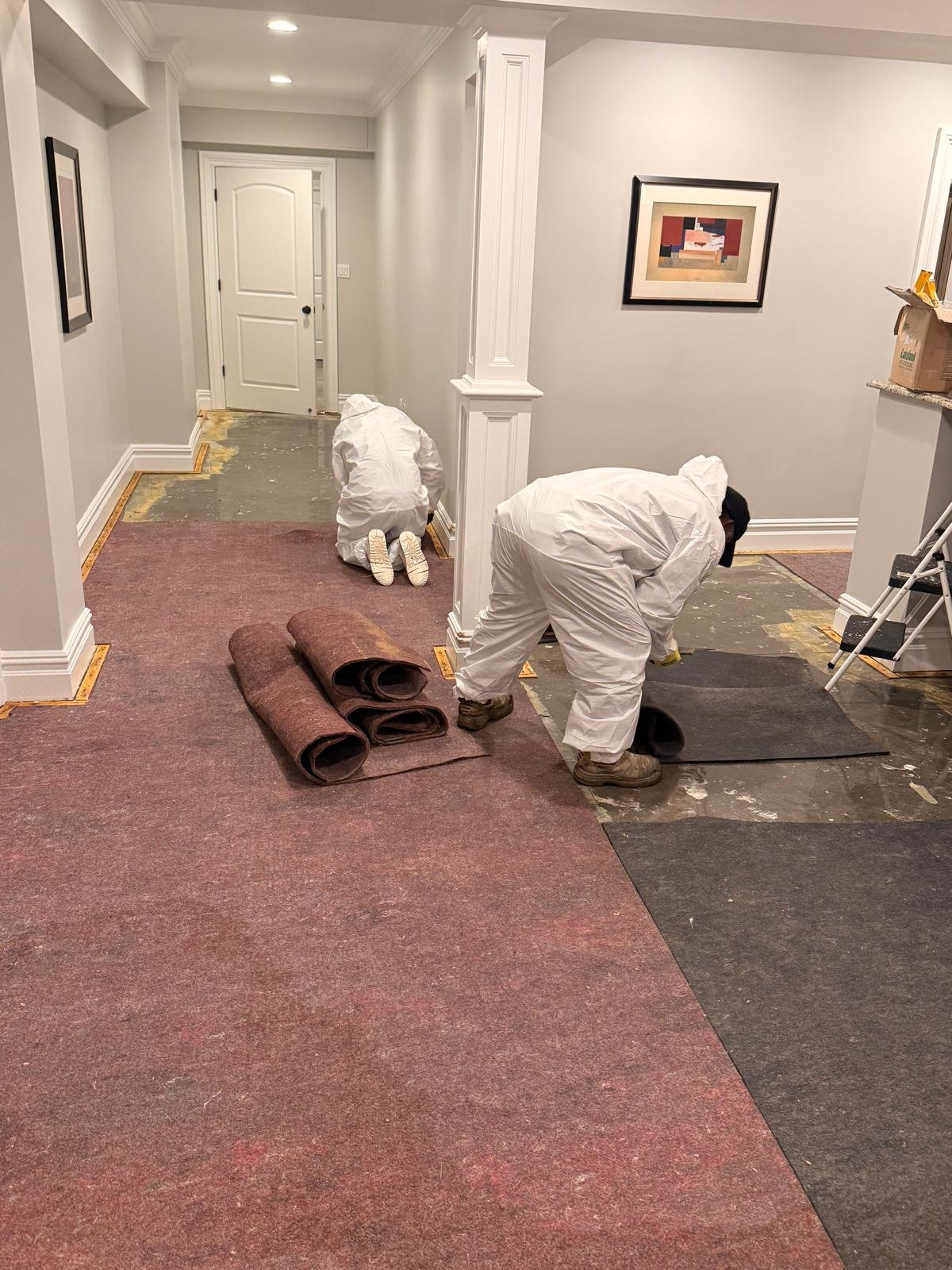
Step two: damaged material removal. Materials that cannot be saved are removed and disposed of according to industry protocols. This typically includes saturated insulation, carpet padding, particleboard, and any contaminated drywall or framing. Items that can be saved are documented and either dried in place or removed for off-site restoration.
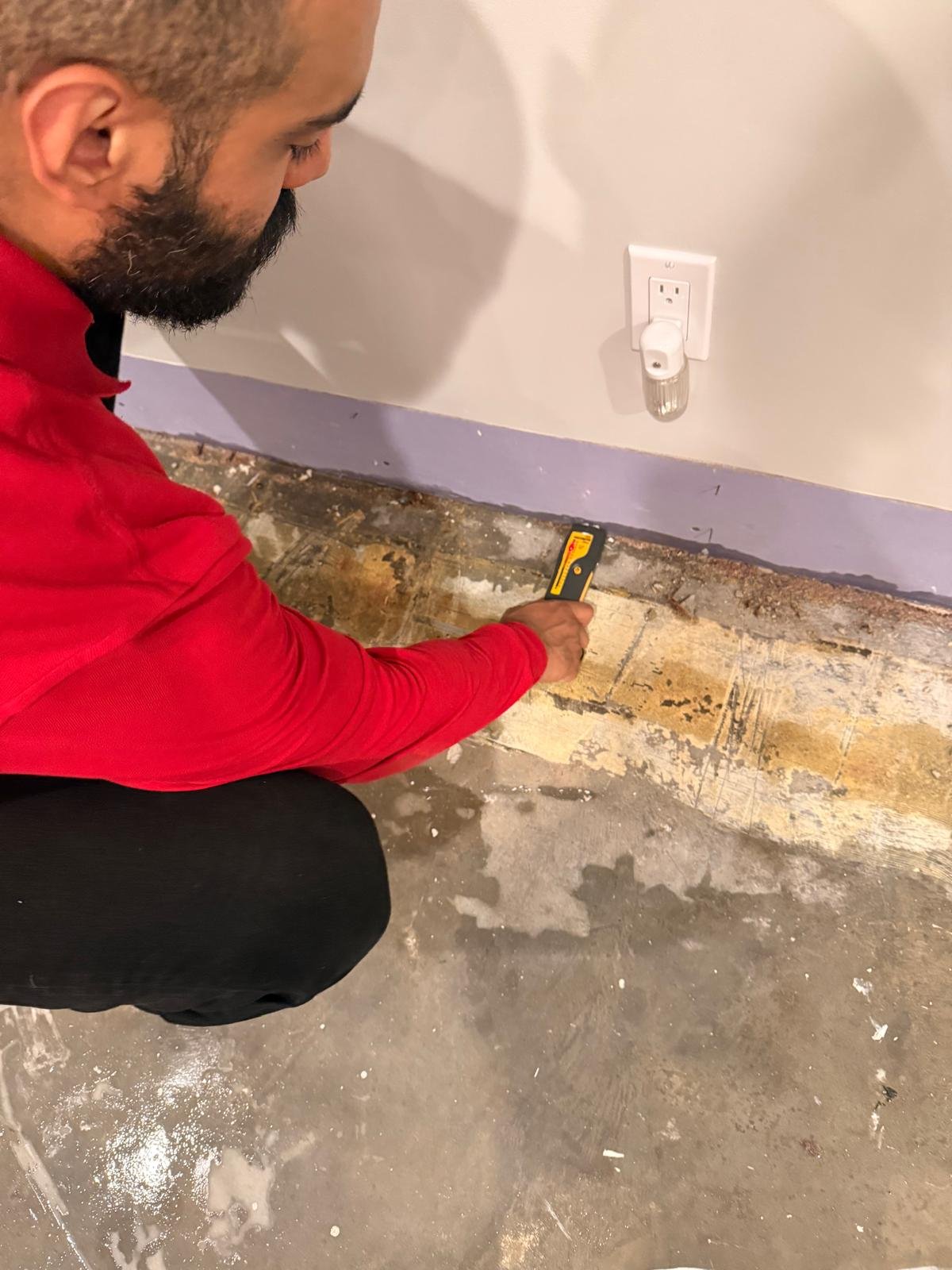
Step three: structural drying. The remaining materials including framing, subfloor, salvageable drywall, and any retained finishes are dried using industrial dehumidifiers and air movers. Daily moisture readings verify that the drying process is on track and continuing toward the dry standard. This phase typically runs three to seven days depending on the volume of water and conditions.
Step four: sanitization and antimicrobial treatment. Once the basement is dry, every affected surface is cleaned and treated with EPA-registered antimicrobial solutions to kill any mold spores and prevent regrowth. For Category 3 jobs involving sewage or contaminated water, this step includes more aggressive sanitization protocols.
Step five: reconstruction and final walkthrough. Damaged drywall, flooring, framing, and finishes are replaced. We coordinate every phase under one project manager so the rebuild begins immediately after drying is complete with no delay or scope confusion between separate contractors.
Speed matters more for flooded basements than for almost any other water damage scenario. Within the first 24 to 48 hours, the difference between professional response and DIY cleanup determines whether your basement becomes a quick recovery or a long, expensive restoration project.
Within the first hour, water has saturated drywall, baseboards, and the lowest sections of framing. Within 24 hours, mold spores begin germinating on every wet porous surface. Within 48 to 72 hours, visible mold colonies form behind drywall and on framing. Within a week, the structural integrity of subfloor and lower wall framing can begin to compromise if the water is not removed.
Restorian responds to flooded basement calls 24 hours a day, 7 days a week. Most addresses across our core service area in northern New Jersey see crews on site within 90 minutes to 2 hours of the call. The crew that arrives is the crew that handles the job from extraction through drying through reconstruction. There are no handoffs, no waiting for a different company to do the next phase, and no gaps in the timeline that allow more damage to develop.
Insurance coverage for flooded basements depends on the source of the water and your policy. This is one of the most misunderstood areas of homeowner insurance and one where professional documentation makes a significant difference in claim outcomes.
Standard homeowner insurance policies typically cover sudden and accidental water damage from interior sources like burst pipes, water heater failures, and appliance overflows. Most policies do not cover flooding from external sources like rising groundwater, storm runoff, or sewer backup unless specific endorsements have been added. Sewer backup coverage is typically a separate policy add-on. Flood insurance through the National Flood Insurance Program is required for coverage of external flooding events including those caused by heavy rain.
Restorian prepares Xactimate certified estimates and detailed photo documentation for every flooded basement job, formatted in the way insurance adjusters use to evaluate claims. We work directly with all major insurance carriers including NJM Insurance Group, State Farm, USAA, Allstate, AIG, Progressive, American Family Insurance, Nationwide, Liberty Mutual, and Farmers Insurance. Our documentation often determines whether marginal claims are approved or denied because we capture details that homeowners and DIY responders typically miss.
After we complete a flooded basement cleanup, many homeowners ask what they can do to prevent another event. The most effective preventive measures we recommend include:
Some of these are simple homeowner projects. Others require licensed contractors and may be covered partially by insurance after a claim. Restorian can refer you to trusted contractors for any of these preventive upgrades and help coordinate them as part of a post-restoration plan.
Costs vary significantly based on the volume of water, source of the water, materials affected, and how long the water sat before professional response. A small basement event from a burst pipe addressed within hours typically costs less than a Category 3 sewage backup that flooded a finished basement and required full demolition. Most homeowner insurance policies cover sudden and accidental water damage, and Restorian prepares Xactimate certified estimates that streamline the claim process. We provide free consultations and clear scope documentation before any work begins, so you know exactly what to expect.
Stop the source of water if you can do so safely. Turn off electricity to the basement at the breaker if water has reached outlets, appliances, or wiring. Do not enter standing water if you suspect any electrical hazard. Photograph everything before you move or remove anything. Move valuable items to a dry area if you can do so safely. Then call a professional flooded basement cleanup company immediately. The longer the water sits, the more expensive the cleanup becomes and the more material has to be removed and replaced.
It depends on the source. Water from a burst supply pipe or a clean water heater leak is typically Category 1 clean water and presents minimal contamination risk. Water from a dishwasher, washing machine, or shower drain is typically Category 2 gray water with moderate contamination. Water from a sewer backup, toilet overflow, or external storm flooding is typically Category 3 black water and is highly contaminated with bacteria, sewage, and other hazards. We test every flooded basement on arrival and apply the appropriate sanitization and material removal protocols based on water category.
Timelines vary based on water volume, contamination level, and the extent of materials affected. A small clean water event with minimal absorption can sometimes be addressed in 3 to 5 days from extraction through drying. A larger event with full demolition and reconstruction can run 2 to 6 weeks or longer. Most residential flooded basement projects fall in the 1 to 3 week range. We provide a clear timeline estimate after the initial assessment so you know what to expect from extraction through final walkthrough.
Not always. Whether materials can be saved depends on the water category, how long they were exposed, and what condition they were in before the flood. Solid hardwood or LVP flooring on top of a dry subfloor often dries successfully if addressed quickly. Carpet and carpet padding usually need to be removed and replaced after any significant water exposure. Drywall that absorbed water for less than 48 hours can often be dried and saved. Drywall that absorbed contaminated water or sat wet for more than 48 hours typically needs to be cut out and replaced. Our crews assess each material individually and recommend save-versus-remove based on actual moisture readings, not assumptions.
Fill out the form and our team will reach out immediately.
We act fast so your property—and peace of mind—can be restored without delay. With state-of-the-art drying equipment and expert technicians, Restorian is your trusted partner in water damage recovery.

With years of hands-on restoration experience, we’ve handled everything from flooded basements to full-scale commercial water disasters.
Thousands of restoration projects completed across New Jersey.
IICRC-certified technicians with proven results.
Moisture detection tools ensure no damage is left behind.
Water emergencies don’t wait—we’re always on call.